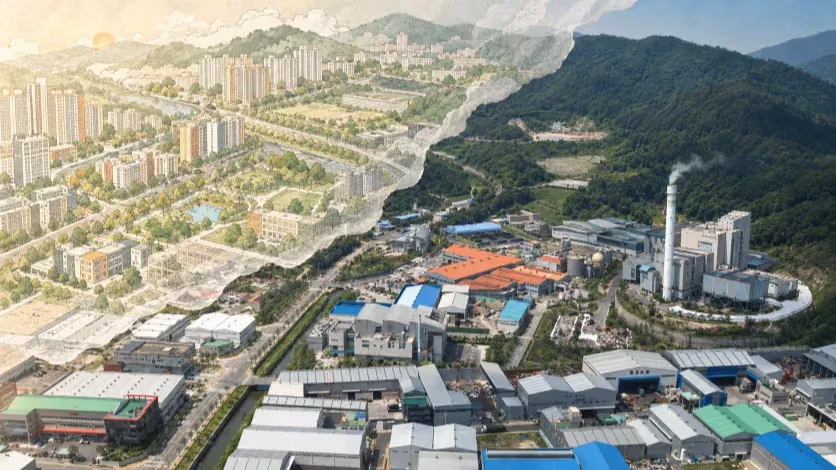
Busan Is Growing Westward as Its Waste Infrastructure Stays Put
Busan’s proposed Saenggok incinerator has moved from 800 to 500 tons a day. The change reveals a larger problem of capacity, aging infrastructure and western urban growth.

Reporting on climate, energy, sustainability, environmental policy, and the transitions reshaping cities, industries, and societies.
About this section
Reporting on climate risk, energy, resilience, environmental policy, and the long-term transitions reshaping Busan and Korea.

Busan’s proposed Saenggok incinerator has moved from 800 to 500 tons a day. The change reveals a larger problem of capacity, aging infrastructure and western urban growth.

South Korea reported an 87 percent drop in aquaculture losses from high water temperatures in 2025. But data from major black rockfish farming waters show that local heat exposure, early harvest and emergency releases changed alongside farm protection.

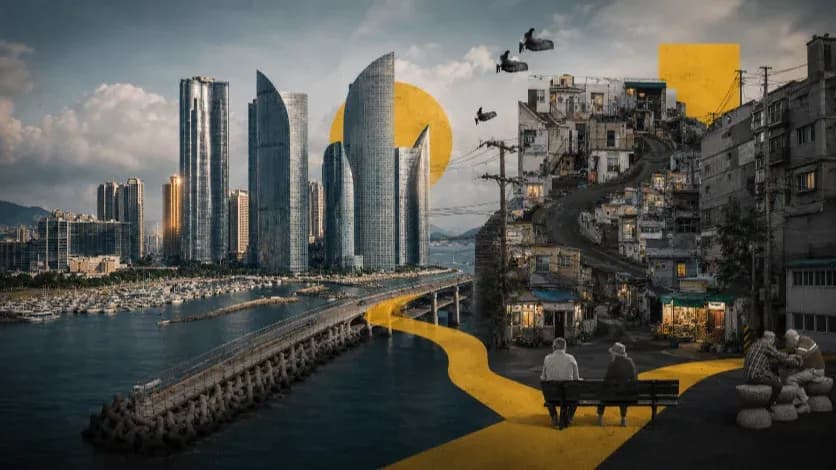
Busan’s apartment-led growth delivered housing and urban renewal at extraordinary scale. The next test is whether the city can maintain the coast, neighborhoods, infrastructure, and high-rises that development left behind.

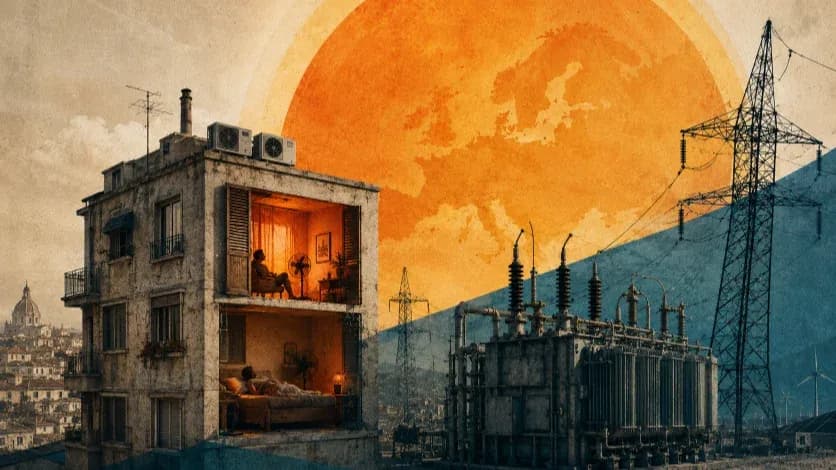
Carbon targets remain essential, but extreme heat is exposing a harder test for the energy transition: whether grids, buildings, cooling systems and household budgets can withstand the climate already arriving.

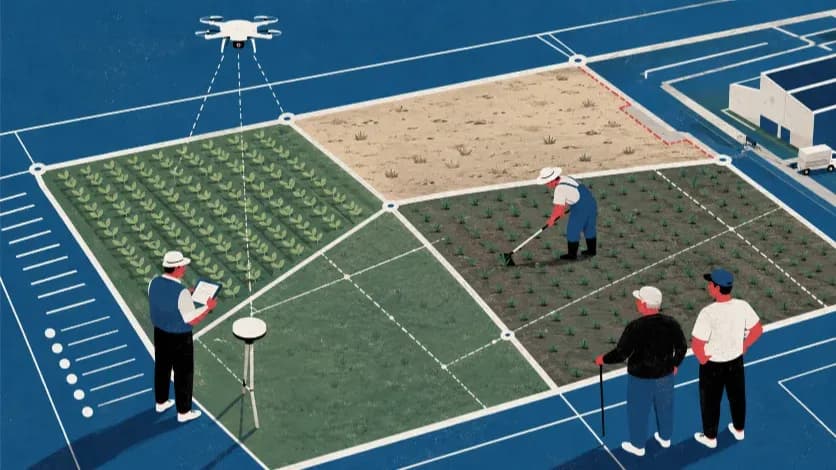
The first nationwide farmland census is designed to expose speculation and misuse. But the harder question begins afterward: who will farm the land, under what terms, and whether it can remain productive in an aging, climate-stressed countryside.

Busan has expanded adaptation planning and disaster-data systems, but its real test lies in whether urban development, drainage and public space are being reorganized around the terrain itself.

A smart-city district on the Nakdonggang River sits on land that once buffered Korea’s largest estuary. Its construction reveals how a national water corporation became a developer.

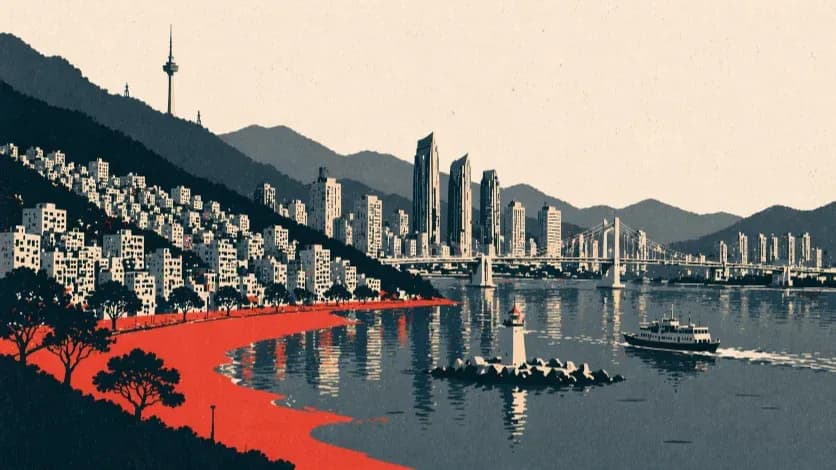
Busan’s skyline soared upward while its public horizons quietly receded. Beaches, ridges, and memorial landscapes now stand at the edge of a slow transformation—one in which the view itself becomes a form of private ownership, and silence becomes the city’s most powerful development tool.

As Busan markets itself as Korea’s next AI and data hub, its energy system tells another story — one dominated by nuclear and imported LNG. With renewables under 3%, the city’s digital ambitions risk colliding with the realities of RE100 compliance and carbon-border regulation.

Rising market prices have not translated into higher farm incomes. With fertiliser and labour costs outpacing gains, farmers remain on the brink. Treating rice only as a consumer story risks undermining the very sector that ensures food security.

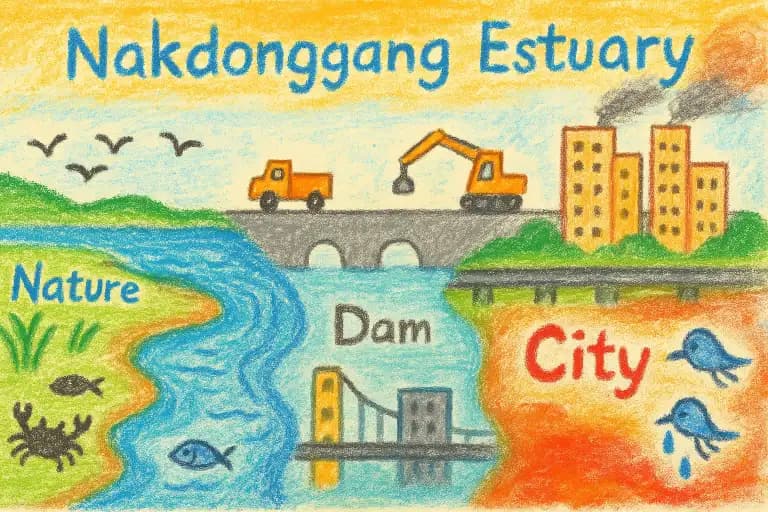
Busan’s Nakdonggang estuary has lost 60% of its wetlands to development. Can sustainability still guide the city’s future?

Rising temperatures, heavier floods, and urban expansion converge on the Nakdonggang River estuary, where decades of data reveal climate and ecological stress.
Search within Sustainability or the wider site.