What Makes a North Korea Policy Survive a Change of Government?
From Kaesong to military agreements, South Korea’s history shows why some North Korea policies survive changes of government while others fail. Lee Jae Myung’s new coexistence policy now faces the same test.


President Lee Jae Myung is trying to give peaceful coexistence with North Korea a more durable institutional form. South Korea’s experience suggests that the decisive test will come when a later government rejects his premises and decides what is still worth keeping.
Ten days before President Lee Jae Myung marked Liberation Day with a new appeal for peaceful coexistence with North Korea, his Unification Ministry had described the relationship it hoped to build in considerably more explicit terms. The ministry’s August 5 policy report called for a “peaceful two-state relationship oriented toward reunification,” language intended to distinguish Seoul’s position from Pyongyang’s doctrine of two permanently hostile states while acknowledging the political reality that two governments have administered the peninsula for generations. By preserving reunification as an eventual horizon while giving coexistence a more explicit political character in the present, the formulation moved beyond the older practice of treating coexistence mainly as a stage on an assumed path toward national integration.
South Korea has long managed the peninsula through a legal ambiguity that makes such language unusually consequential. Seoul and Pyongyang entered the United Nations separately in September 1991, while South Korean law continues to define their relationship as something other than ordinary relations between sovereign foreign states. The Constitution preserves peaceful reunification as an obligation of the state, and the Inter-Korean Relations Development Act describes relations between the two Koreas as a special relationship formed provisionally in the process of pursuing reunification. Successive governments have consequently dealt with North Korea as a separate political authority in practice while preserving a domestic legal order that does not regard separation as the peninsula’s final condition.
Lee’s August 15 address remained inside that unresolved space, though it adopted a different register. He spoke about preventing escalation, establishing safeguards against military confrontation, moving from the armistice toward a peace regime and opening discussions that could produce practical means of halting the further growth of North Korea’s nuclear capabilities. The “two-state” formulation did not appear. There is no basis for reading the omission as evidence that Lee has retreated from the framework his ministry set out ten days earlier; a presidential address on Liberation Day serves a different political purpose from an administrative policy report. The contrast nonetheless brings two separate tasks into view: defining the political character of division and building institutions capable of managing it when relations deteriorate.
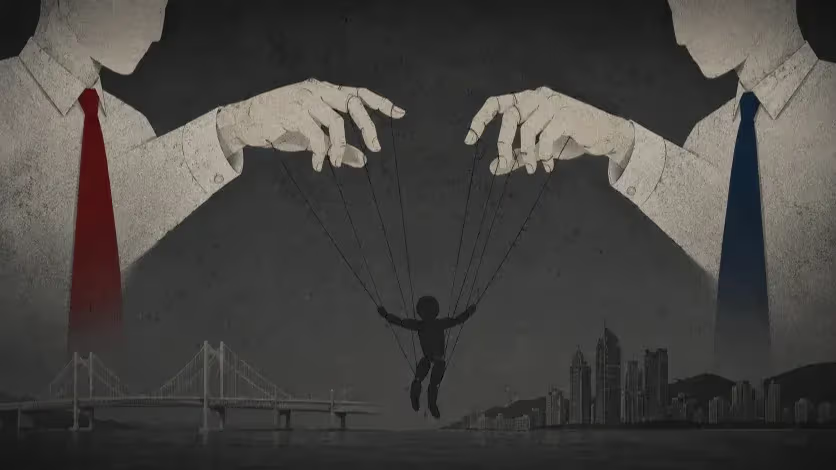
Whatever Lee’s government constructs will eventually pass to an administration with different assumptions about North Korea, reunification and the balance between restraint and deterrence. South Korean history contains agreements that remained formally intact as implementation receded, programs created during periods of engagement that conservative governments later retained under different rationales, and arrangements so closely tied to one side’s conception of military risk that a change of government transformed the institution itself into a political dispute. One of the most consequential tests of Lee’s project will therefore come years after the policies are written, when another government decides what to keep.
The Long Search for Continuity
South Korean governments were trying to discipline this cycle long before Lee took office. The Inter-Korean Relations Development Act, enacted in 2005, represented one of the clearest attempts to move policy away from the discretion of individual presidents and into a more regular administrative framework. It established five-year planning, procedures for handling inter-Korean agreements and a legislative role for the National Assembly in agreements carrying major financial or statutory consequences. The law’s own legislative history described stability and consistency in North Korea policy as objectives of providing a firmer legal foundation for inter-Korean relations.
The five-year plans themselves reveal the limits of that ambition. Yoon Suk Yeol’s fourth plan was designed to cover 2023 through 2027, yet Lee’s government adopted a fifth plan in 2026 extending through 2030. The new document places “peaceful coexistence and common growth on the Korean Peninsula” at the center of its vision and identifies institutionalizing peaceful coexistence, preparing a basis for common growth and pursuing a peninsula without war or nuclear weapons among its principal goals. The revision remained fully inside the statutory structure: planning could impose a longer administrative horizon without freezing the political premises of the administration responsible for the plan.
The older diplomatic record shows a similar separation between institutional form and political practice. The 1991 Basic Agreement established reconciliation, nonaggression and exchange as principles of the post-Cold War relationship while resting on the idea that relations between the two Koreas occupied a special condition short of normal interstate relations. South Korean courts subsequently held that the agreement did not possess the same binding domestic force as a conventional treaty or statute, even though governments continued to treat it as a foundational political document. Its place in the diplomatic record could therefore remain intact while administrations differed markedly over sanctions, economic cooperation, military confidence building and the conditions for renewed dialogue.
The aftermath of the Cheonan sinking in March 2010 made that flexibility particularly visible. Lee Myung-bak’s government imposed the May 24 measures, sharply curtailing inter-Korean trade, visits, new investment and other forms of cooperation while exempting the Kaesong Industrial Complex from some of the restrictions. A decade later, the Unification Ministry said successive exceptions and flexible application had caused the measures to lose much of their practical effect, even though they had not been formally abolished. Seoul had moved policy in both directions without first clearing every earlier measure or agreement from the books.
South Korea’s National Community Unification Formula lasted under rather different conditions. Consolidated under Kim Young-sam in 1994 from ideas developed during Roh Tae-woo’s presidency, it envisioned a progression from reconciliation and cooperation to an intermediate stage of inter-Korean union and eventually a unified state. The framework was subsequently inherited across progressive and conservative governments even as their approaches to sanctions, reciprocity, engagement and North Korean denuclearization diverged sharply.
Its breadth allowed governments with markedly different security doctrines to remain inside the same architecture. The formula offered limited guidance for the daily management of inter-Korean relations, but that looseness also made it difficult for any one administration to claim exclusive ownership of it. Lee’s proposed two-state language is more exact. It seeks to describe the peninsula’s present political condition while distinguishing Seoul’s approach from Pyongyang’s abandonment of reunification. Greater precision may address a reality the older formula left largely implicit, though it also moves the doctrine itself closer to the center of partisan and constitutional conflict.
Institutions Another Government Could Use
The institutions that moved most easily across South Korea’s political divide generally demanded less agreement from the governments that inherited them. They did not require a president to settle the constitutional character of division or accept a predecessor’s assumptions about the sequence between denuclearization and reconciliation. Their narrower purposes gave later administrations room to preserve the machinery while supplying their own reasons for doing so.
Policy toward families separated by the Korean War offers one of the clearest examples. Actual reunions depended heavily on Pyongyang and could disappear for years when relations deteriorated. South Korea nevertheless built administrative infrastructure whose usefulness did not end when the North withdrew cooperation. The government has produced video letters for separated families since 2005, while a genetic-testing program launched in 2014 continued across the Park, Moon and Yoon years. By the end of 2024, the government had collected genetic samples from 29,319 people and stored the results in a database intended to preserve the possibility of future family identification.
A progressive administration could place divided-family policy within a broader project of reconciliation, while a conservative government could maintain the same records as a humanitarian responsibility toward South Korean citizens and their relatives. Neither rationale required officials to redesign the underlying program or an incoming government to endorse the wider diplomatic strategy of its predecessor.
Communications channels survived in a harsher environment. Pyongyang repeatedly cut inter-Korean communications, and in June 2020 it demolished the joint liaison office at Kaesong. Yet the Yoon government, while rejecting much of Moon Jae-in’s wider engagement policy, officially reported that it continued trying every day to restore inter-Korean communications. Under a strategy that placed much greater weight on deterrence, direct contact could still be justified as a means of conveying warnings and reducing the danger that military activity would be misunderstood.
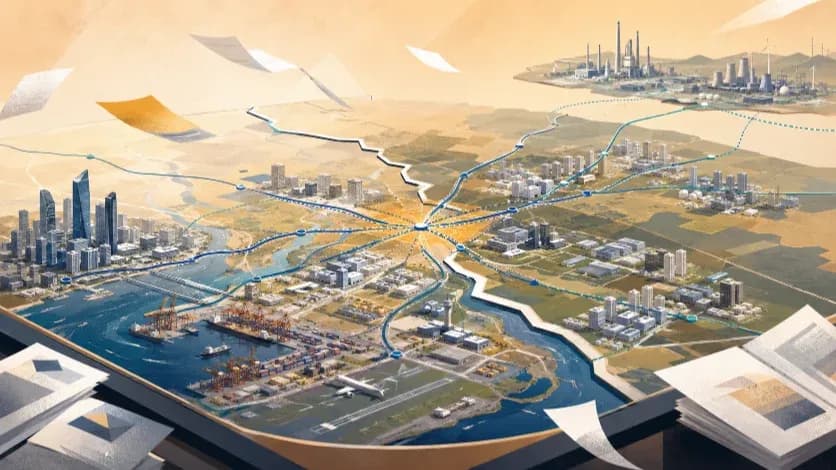
Even prolonged North Korean noncooperation did not require Seoul to discard the personnel, protocols and administrative memory surrounding those mechanisms. A divided-family database could continue to grow while reunions remained impossible, and communications procedures could be preserved when calls went unanswered. Economic cooperation was harder to sustain in the same fashion. The Kaesong Industrial Complex required South Korean investment, North Korean labor, daily movement across the border and a continuing willingness on both sides to tolerate an institution created explicitly to deepen interaction between the two economies.
Kaesong’s Political Second Life
Kaesong had been conceived during the engagement policies of Kim Dae-jung and Roh Moo-hyun, and its political lineage was impossible to disguise. South Korean firms supplied capital and management while North Korean workers supplied labor inside an industrial zone north of the Demilitarized Zone. Regular economic interaction was expected to create interests capable of surviving political tension and make the relationship less dependent on episodic diplomacy. Critics of the Sunshine Policy saw many of the same features as liabilities, including revenue reaching the North and the possibility that economic interests would make Seoul reluctant to impose costs after provocations.
Lee Myung-bak nevertheless kept the complex operating as relations with Pyongyang deteriorated around it. The May 24 measures sharply curtailed most new inter-Korean economic activity after the Cheonan sinking, while Kaesong remained an important exception. By then the complex contained South Korean companies, employees, contracts and infrastructure whose abrupt removal would impose costs of its own, while its daily operation required the two governments to maintain one of the few practical channels still functioning between them.
North Korea tested that accommodation almost immediately after Park Geun-hye took office. Amid a sharp deterioration in relations in the spring of 2013, Pyongyang blocked South Korean access and withdrew its workers, leaving production suspended for months. Seoul entered prolonged negotiations over the terms of resumption, and the two governments reached agreement after seven rounds of talks running from July into August. The negotiations also addressed internationalization of the complex and measures intended to prevent another unilateral interruption.
The arguments used to defend Kaesong had by then changed. Park’s government did not need to recover the earlier expectation that economic integration itself would gradually transform inter-Korean relations. South Korean safety, clearer operating rules, responsibility for disruptions and a more internationally grounded commercial environment supplied a vocabulary more compatible with a conservative administration. A project born from engagement could remain in place after the political argument surrounding engagement had changed.
Less than three years later, Park’s government closed it. North Korea conducted its fourth nuclear test in January 2016 and followed it the next month with a long-range rocket launch. Seoul ordered the complex shut on February 10 as it moved toward a broader strategy of sanctions and pressure. The administration that had invested political capital in restoring Kaesong in 2013 had reached a different judgment about what its continued operation meant under a more threatening security environment.
Kaesong survived the political era that created it and crossed a partisan transition before a nuclear crisis overwhelmed the accommodation. Conservative administrations had been able to assign the complex purposes compatible with their own priorities. Once continuation itself became part of the security dispute, that room narrowed sharply.
When the Institution Becomes the Dispute
The September 19 military agreement brought the limit into sharper relief. Signed in 2018 during the inter-Korean détente, it sought to reduce military tension through restrictions and confidence-building measures around sensitive areas of the border. Moon’s government treated those provisions as part of a wider attempt to place rules around a military relationship that had repeatedly moved from one crisis to another.
Yoon’s administration judged many of the same provisions through different security priorities. The Defense Ministry later argued that the agreement had constrained South Korean surveillance and realistic training near operational areas. After North Korea launched a military reconnaissance satellite in November 2023, Seoul suspended part of the agreement, restoring aerial surveillance near the Military Demarcation Line. North Korea then declared that it would no longer be bound by the accord and would restore military measures previously suspended under it.
South Korea suspended the agreement in full on June 4, 2024, after another deterioration that included North Korean balloon launches and GPS interference. The government said the decision would remain in place until mutual trust was restored and argued that the suspension was necessary to remove restrictions on South Korean military activity near the border. North Korean conduct materially changed the conditions in which the agreement operated, so its breakdown cannot credibly be explained as the automatic consequence of a conservative government succeeding a progressive one.
The comparison with Kaesong still matters. Park could preserve the industrial complex by changing the political argument for its continuation. A communications line can likewise serve as confidence-building infrastructure under one administration and crisis-management infrastructure under another without altering its basic operation. Restrictions on surveillance or training afford less room for such a conversion. When one government sees them as necessary to reduce the chance of an accidental clash and another believes they weaken its ability to monitor and deter an expanding threat, the disagreement reaches the institution’s operating core.
Lee now intends to begin restoring the September 19 framework as part of his government’s effort to reduce tension. A future administration could accept the goal of preventing accidental confrontation and still reject the balance of military restraint embodied in the 2018 accord.
What Law Can Preserve
Lee’s interest in stronger legal foundations for inter-Korean policy follows naturally from this history. The Unification Ministry has commissioned work on a new Basic Agreement with North Korea that explicitly includes the possible application of the 1972 East-West German Basic Treaty, compatibility with South Korea’s Constitution and statutes, the possibility of National Assembly consent and strategies for securing broader public agreement.
Existing law gives that approach some force while also exposing its limits. Inter-Korean agreements occupy an unusual position because Seoul has never treated Pyongyang simply as another foreign government. Courts have held that the 1991 Basic Agreement, despite its political significance, cannot be treated as a conventional interstate treaty with the same force as domestic law. That judicial position reflects the special legal character South Korean law assigns to the relationship itself.
The executive consequently retains considerable discretion when cooperation collides with changing security conditions. Businesses affected by the 2016 shutdown of Kaesong challenged the decision, but the Constitutional Court rejected the central constitutional claims. The court also concluded that the 2013 agreement on normalizing Kaesong could not simply be treated as carrying the same domestic legal force as ordinary law.
National Assembly consent can erect a firmer barrier against formal suspension. Article 23 of the Inter-Korean Relations Development Act allows the president to suspend all or part of an inter-Korean agreement under specified circumstances, but requires renewed National Assembly consent when the agreement being suspended originally received legislative consent for its conclusion and ratification. A future Basic Agreement approved on that basis would therefore be harder to set aside through executive action alone. Its practical life would still depend heavily on decisions over negotiations, budgets, access, humanitarian activity and security policy.
A bill introduced on March 20 seeks to formalize another part of the policy process. The proposed Peaceful Unification Foundation Act calls for social dialogue during preparation of a national unification framework, reporting the draft to the National Assembly and a formal process for finalizing and promulgating it. The bill’s stated rationale explicitly points to repeated changes in unification policy after changes of government. The Assembly receives the draft as a report under the proposal; the legislation does not give lawmakers an approval power equivalent to parliamentary consent to certain inter-Korean agreements. As of August 16, the proposal remained referred to the National Assembly’s Foreign Affairs and Unification Committee.
Legal design can make abrupt reversals more politically and institutionally costly without determining how later governments will use the structures they inherit. The West German case now being studied in Seoul is useful for another reason: institutions associated with Ostpolitik acquired their deepest political protection only after politicians who had resisted their creation began to use them.
The Opposition Learned to Govern Through It
Willy Brandt’s Ostpolitik and the 1972 Basic Treaty with East Germany emerged from intense political conflict rather than an established bipartisan settlement. The treaty provided for normal good-neighborly relations between the two German states on the basis of equality, while West Germany continued to maintain that German unity remained constitutionally open. The Bundestag ratified the treaty in 1973, and the broader framework became part of a new structure of relations across the German divide.
Helmut Kohl’s Christian Democrats did not have to adopt Brandt’s political philosophy in order to accept the treaties as instruments of government. In a Bundestag speech in November 1980, Kohl described the Eastern treaties, United Nations membership and the Helsinki Final Act as instruments of German foreign policy that should be used in the interests of Germany and peace. When Kohl became chancellor in 1982, his government continued and developed the Ostpolitik of its predecessors while attaching greater weight to NATO, Western alignment and its own interpretation of the unresolved German question.
The practical consequences soon became visible. In July 1983, a West German banking consortium extended a one-billion-deutsche-mark credit to East Germany backed by the federal government. Franz Josef Strauß, the conservative Bavarian leader and a fierce opponent of Brandt’s policies, played a central role in arranging the transaction with East German official Alexander Schalck-Golodkowski. The agreement supplied East Germany with urgently needed financial relief during a period of severe East-West tension.
The inherited institutions acquired different uses under conservative government. The Kohl administration continued to develop the contractual framework created in the 1970s while emphasizing Western defense, the continuing German national question and practical improvements for people living under division. Contacts and economic arrangements no longer required endorsement of Brandt’s original expectations in order to remain politically usable.
South Korea confronts conditions West Germany did not. East Germany was not a nuclear-armed state capable of transforming the domestic politics of engagement through a weapons test, and the Basic Treaty was embedded in a wider European order involving the United States, the Soviet Union, Berlin arrangements and the Helsinki process. Seoul is considering a new architecture while Pyongyang rejects much of the dialogue on which that architecture would depend and while deterrence, sanctions and alliance management continue to dominate the regional security environment.
The narrower German precedent remains relevant. Conservative governments kept institutions established under Ostpolitik because those institutions could be put to work inside a conservative strategy. No comparable ownership yet surrounds Lee’s two-state formulation, even though narrower mechanisms of inter-Korean contact have already moved between South Korean governments in much the same way.
A Public More Comfortable With Coexistence Than Its Politics
South Korean public opinion has moved in a direction that gives Lee more room than the intensity of partisan argument might suggest. The Korea Institute for National Unification’s 2025 survey found that 49 percent of respondents regarded reunification as necessary, the lowest share since the institute began asking the question in 2014. In a separate item, 63.2 percent agreed that reunification would be unnecessary if the two Koreas could coexist peacefully without war, the highest share since that question entered the survey in 2016. Support for another inter-Korean summit stood at 69.4 percent.
Those figures require some care. Agreement with peaceful coexistence does not establish support for permanent division, and it cannot be converted into endorsement of Lee’s particular constitutional or diplomatic formulation. What the survey does show is that a growing share of South Koreans can imagine a prolonged period in which preventing war and managing separation have political value independent of near-term reunification. KINU also found little ideological variation in the peaceful-coexistence item, making it a notably broader social position than many specific policies toward North Korea.
The practical experience of the past decade helps explain the shift. Reunification has become increasingly remote as a foreseeable policy outcome while the consequences of division remain immediate: military incidents near the border, continuing North Korean nuclear development, humanitarian separation and the danger created by prolonged periods without reliable communications. A voter can favor a summit or humanitarian contact without holding a settled position on whether the peninsula should ultimately consist of one state or two, and can simultaneously remain skeptical of economic cooperation or military restrictions whose costs are easier to see.
Partisan differences sharpen as policy moves from broad objectives to specific institutions. Kaesong raises questions about sanctions, financial flows and the vulnerability of South Korean companies. Military agreements require governments and voters to decide how much operational freedom should be exchanged for reduced friction near the border. The People Power Party has taken the dispute over two-state language further, attacking attempts to characterize the relationship in state-to-state terms as incompatible with South Korea’s constitutional and statutory understanding of reunification.
A separate survey commissioned by the Unification Ministry in 2025 reported 69.9 percent support for a “peaceful two-state relationship oriented toward reunification.” Because the government sponsored the survey and presented respondents with the policy formulation itself, the result should not be treated as equivalent to an independent measure of spontaneous public identification with Lee’s doctrine. Read alongside the KINU series, it supports a narrower and more defensible conclusion: the constituency for avoiding permanent confrontation extends further across the electorate than demonstrated support for any single constitutional or institutional design for coexistence.
Lee can already act on part of that constituency without waiting for Pyongyang. South Korea can maintain humanitarian infrastructure, prepare domestic procedures for future agreements and preserve mechanisms for crisis communication. A Basic Agreement, restored bilateral military confidence-building or a wider peace regime requires North Korean participation, just as Seoul cannot determine whether Pyongyang will answer a hotline or enter negotiations over its nuclear program. The Unification Ministry’s own August policy report acknowledges the need to draw a North Korean response as it sets out steps Seoul can begin taking unilaterally.
Those differences should matter in the way the administration assembles its domestic architecture. Humanitarian records and communications procedures can retain value during prolonged noncooperation; military restrictions, large economic projects and formal bilateral agreements depend much more heavily on reciprocity and on security judgments that later governments may revisit. The two-state formulation faces a separate vulnerability because its political meaning is already contested inside South Korea before any corresponding agreement with Pyongyang exists.
Binding these mechanisms too tightly into a single political project could allow opposition to the most controversial element to travel through the rest. A conservative successor might retain humanitarian infrastructure and direct communications while rewriting military arrangements, postponing economic cooperation and rejecting the two-state terminology. The resulting policy would look less coherent as an inheritance of Lee’s presidency, though the room to alter it may be precisely what allows parts of it to remain in use.
Lee’s Liberation Day address is notable in this respect because its operative concerns were less doctrinal than the ministry report issued ten days earlier. Preventing escalation, establishing safeguards, limiting the further growth of North Korea’s nuclear capabilities and seeking a more stable peace arrangement would remain recognizable problems for a government that rejected Lee’s description of the relationship between the two Koreas. A conservative administration could dispute his methods, place greater weight on deterrence and attach stricter conditions to dialogue without concluding that every channel created during his presidency had become useless.
Summits, statutes and even a future Basic Agreement would provide imperfect evidence of what Lee had made durable. The more revealing moment would come under a government that criticized his policy, altered substantial parts of it and nonetheless found some of the inherited machinery worth using.
South Korea has spent decades producing ambitious accounts of how the division of the peninsula might eventually end. The mechanisms that traveled most successfully across changes of government were often more prosaic: a broad framework capable of accommodating different policies, records maintained for families whose reunions never occurred, communications preserved because governments in confrontation still need ways to convey intentions, and administrative arrangements whose practical value survived after the political language surrounding them had faded. Several failed when nuclear tests or military crises changed the conditions under which they operated, but enough remained to keep each deterioration in relations from erasing everything constructed before it.
Lee is trying to give the long interval between division and any eventual settlement a more explicit political and institutional structure. North Korea, the regional security environment and future crises will determine how much of that project can operate as intended. South Korea retains greater control over another question: whether the institutions built during this presidency leave enough room for political disagreement after it ends. The strongest parts of Lee’s inheritance will be those a later government can revise without finding it necessary to destroy them.
Editorial Context
"Independent journalism relies on radical transparency. View our full log of editorial notes, corrections, and project dispatches in the Newsroom Transparency Log."
Reader Pulse
The report's impact signal
Be the first to provide a reading pulse. These collective signals help our newsroom understand the impact of our reporting.
Join the discussion
A more thoughtful conversation, anchored to the story
Atlantic-style discussion for this article. One-level replies, editor prompts, and moderation-first participation are now powered directly by Prisma.
Discussion Status
Open
Please sign in to join the discussion.
The Weekly Breeze
Independent reporting and analysis on Busan,
Korea, and the broader regional economy.