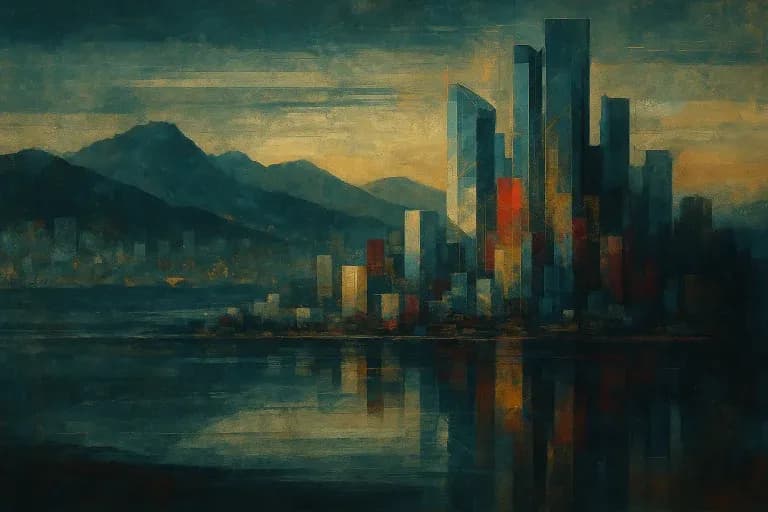
Busan’s Skyline and the Vanishing Horizon
Busan’s skyline grows higher each year, promising beauty and prosperity. But behind the towers lies a quieter truth — a city losing its landscape, its rhythm, and its memory.
Opinion, commentary, and analysis from the Breeze in Busan editorial desk and contributing writers on politics, society, culture, and change.
About this section
Opinion, commentary, and analysis on public life, institutions, culture, and the arguments shaping Korea and Busan.
Busan’s skyline grows higher each year, promising beauty and prosperity. But behind the towers lies a quieter truth — a city losing its landscape, its rhythm, and its memory.
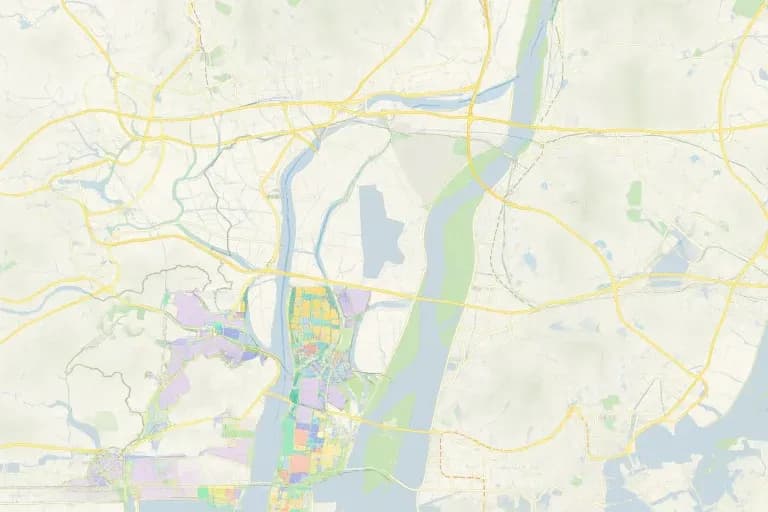
As Busan pushes its urban frontier into the Nakdonggang River delta, its grand plans collide with the slow physics of mud, water, and distance. The city’s westward expansion promises connection, but the land still speaks in the language of resistance.

South Korea’s digital ambitions are growing faster than its power grid. As global capital pivots toward energy infrastructure, Busan stands at the intersection of innovation and inertia — a city with the assets to lead, but still searching for the power to sustain its future.

Only a third of Busan is flat land. Mountains split districts, rivers divide east and west. Within these limits, transit always trails growth — and decline moves faster than rails.

In the West, Millennials born a decade apart share one category. In Korea, the same gap marks entirely different worlds — PC cafés versus smartphones, protest politics versus algorithmic feeds. Compressed modernization made adolescence, not age, the true fault line of generational identity.

U.S. forces in Korea are not charity. The peninsula anchors Washington’s Indo-Pacific strategy as much as it safeguards Seoul. The alliance is reciprocal, not one-sided.

South Korea’s judicial reform recalibrates prosecutorial power and court governance to strengthen neutrality, transparency, and constitutional balance.

What happens when a city keeps building, but its future doesn’t arrive—and what a leading demographer says we should ask next.

South Korea’s elite public institutions still select power-holders through closed pipelines and test scores. Can democracy survive without reform?

The creation of Busan National University (BNUS) would unify four major institutions, streamlining resources and focusing each campus on specialized maritime fields.

What happens when society stops running on rules and starts reacting like a molecule? Explore the collapse of causality, the rise of interpretive humans, and why sensing flows — not storing facts — is now the key to intelligence.

Arctic geopolitics is reshaping the maritime order. This longform analysis investigates Busan’s latent role, its institutional gaps, and the urgent need for governance reform.
Search within Opinion or the wider site.