What South Korea’s 87% Drop in Aquaculture Heat Losses Really Measures
South Korea reported an 87 percent drop in aquaculture losses from high water temperatures in 2025. But data from major black rockfish farming waters show that local heat exposure, early harvest and emergency releases changed alongside farm protection.


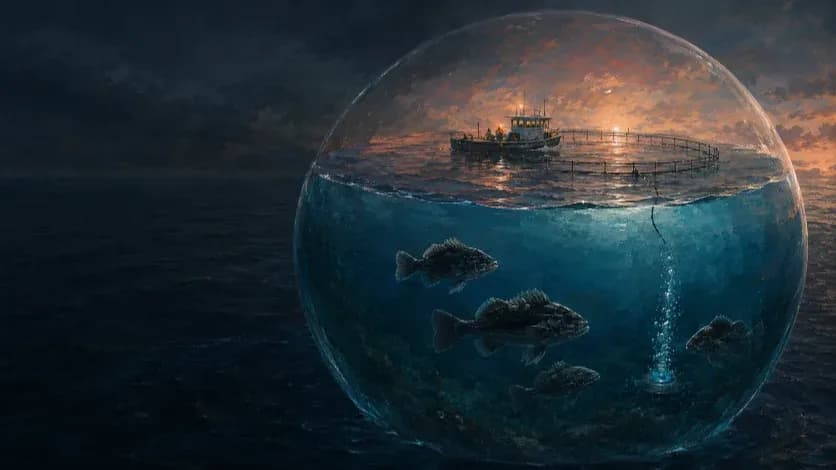
Official losses from high water temperatures fell 87 percent in 2025, even as South Korea’s national warning season stretched to a record 85 days. A closer examination of the water around major black rockfish farms, the fish removed before peak heat and the condition of those that survived shows why the decline cannot be read from the disaster ledger alone.
South Korea entered the summer of 2026 with an exceptional result from the previous year already shaping its aquaculture policy. High-temperature warnings had remained in force somewhere along the country’s coast for 85 days in 2025, the longest such period on record, yet officially assessed high-temperature damage to aquaculture fell to 17.7 billion won from 143 billion won in 2024. The Ministry of Oceans and Fisheries describes the decline as 87 percent and has credited earlier intervention, emergency releases, high-temperature response equipment and cooperation among government and farmers; many of those measures have since been expanded. The comparison is striking, but the two headline figures describe different parts of the event: the warning season records how long dangerous conditions were present somewhere across a long national coastline, whereas the damage assessment records the losses remaining after individual farms had encountered different water conditions and taken different actions.
A Breeze in Busan reconstruction of August conditions at five long-running monitoring locations around Tongyeong and Geoje points to a substantial difference in the persistence of extreme heat. The analysis counted a station-day whenever the lowest temperature recorded during an entire day exceeded 28 degrees Celsius. Across Bisan-do, Hakrim and Yeongun in Tongyeong, and Gabae and Irun in Geoje, August 2024 produced 29 such station-days: seven at Bisan-do, four at Hakrim, five at Yeongun, six at Gabae and seven at Irun. In August 2025, the same rule produced three, all at Gabae; the other four locations recorded none.
The measure is deliberately narrow. A daily minimum above 28 degrees is not a mortality threshold, and five monitoring points cannot reproduce every condition inside every commercial cage. The comparison does capture something that the national warning count cannot: whether extremely warm water persisted through even the coolest observation of the day. Black rockfish respond to the duration and variability of heat as well as to its peak, while disease, dissolved oxygen, handling and other farm conditions can alter the biological outcome. A summer that generates more warning days somewhere along the Korean coast does not necessarily impose a larger thermal burden on the farms that suffered most heavily the year before.
Water conditions account for only one part of the year-to-year change because farms were also altering the population left at risk. Before and during the 2025 high-temperature season, fisheries authorities promoted earlier shipment of market-ready fish, began supplying liquid-oxygen systems and other equipment earlier in the year, and simplified an emergency-release mechanism for fish considered at imminent risk. Some animals remained in cages under intensified management; others reached the market or were released before later heat could kill them. The final mortality total therefore reflects at least three moving conditions: the heat that actually reached the farms, the number of fish still present when it arrived and the ability of farmers to protect the stock that remained.
The fall from 143 billion won to 17.7 billion won may represent substantial progress, but the number cannot isolate those effects by itself. Establishing what improved requires following the event from the water into the cage, through decisions about inventory before peak temperatures, and onward into the growth, harvest and market value of the fish that survived.
Along the South Coast, the Difference Was Persistence
South Korea’s high-temperature warning system covers an environmentally diverse coastline and was never designed to function as a biological dose meter for a particular farm. The distinction matters even more because the observing network itself has changed. The National Institute of Fisheries Science recorded 194 stations in its integrated system for 2024 and 200 for 2025, with additional Tongyeong and Geoje stations linked to the network during 2025. Comparing every sensor available in one year with every sensor available in another would therefore mix changes in the sea with changes in where the sea happened to be measured.
The Breeze comparison keeps the geography stable by using five long-running locations that span both summers at a comparable near-surface observation depth: Bisan-do, Hakrim and Yeongun in Tongyeong, and Gabae and Irun in Geoje. These are NIFS monitoring-station labels rather than a claim that each sensor represents every cage within the wider locality. The value of the panel lies in comparing the same places with themselves from one summer to the next.
The contrast appears most clearly in the absence or presence of overnight relief. At Bisan-do, the daily minimum rose above 28 degrees on Aug. 16, 2024 and remained there for seven consecutive days, reaching more than 29 degrees during part of the run. Yeongun recorded five consecutive days from Aug. 16 through Aug. 20 when its daily minimum exceeded 28 degrees, while Irun remained above that standard for seven days from Aug. 14 through Aug. 20 and reached a daily maximum of about 30 degrees during the period. Gabae and Hakrim recorded their own multi-day runs, leaving every station in the five-location panel with a period during which even its daily low remained above 28 degrees.
August 2025 was not simply a cool month. Gabae reached a daily maximum of about 29.5 degrees early in the month and subsequently recorded minima above 28 degrees for three consecutive days. Conditions then changed quickly. The minimum at Gabae fell into the mid-twenties and then the low twenties within several days, while Bisan-do and Yeongun followed a similar broad transition from upper-twenties water during the first week to markedly cooler conditions around the second week of August. Hakrim recorded no day during the month with a minimum above 28 degrees, and Irun likewise showed no day meeting the threshold.
The distinction is persistence rather than the mere presence of a hot episode. Extreme temperatures developed around parts of Tongyeong and Geoje in both summers, but the reproduced daily observations show a much more sustained period of late-August heat in 2024 and a pronounced interruption of high temperatures around the second week of August 2025. The 29-to-three comparison should not be read as a 90 percent decline in biological risk: station-days are not mortality units, and 28 degrees is not a universal lethal threshold. It establishes something narrower and more defensible—that the five monitored farming areas did not experience the same pattern of sustained August heat in the two years.
A major black rockfish mortality investigation in Gyeongsangnam-do in 2012 illustrates why that distinction deserves attention. Roughly 1.8 million fish died during the event. The maximum water temperature in the affected area reached 28.4 degrees Celsius, but investigators also measured daily temperature changes as large as 6.5 degrees and detected red seabream iridovirus, Vibrio and parasites in portions of the sampled stock. High temperature accompanied by repeated thermal changes was identified as a major cause, with biological disease contributing to greater mortality in some fish. The episode offers no simple temperature formula for current farms, but it makes a strong case against treating a seasonal maximum—or the duration of a nationwide administrative warning—as a sufficient description of biological exposure.
The five-meter observational layer has limitations of its own. Commercial cages extend vertically through the water column, and fish can move within them; Hakrim, for example, is monitored at multiple depths that could eventually help establish whether deeper water offered meaningful thermal relief during the hottest periods. Dissolved oxygen would add another important dimension because warming changes the respiratory environment, but historical oxygen coverage is not sufficiently comparable across the entire panel to justify manufacturing a continuous series from sparse observations. Missing values should remain missing rather than being converted into the appearance of precision.
The local temperature evidence nevertheless places an important boundary around the 2025 success story. A record-long national warning season does not demonstrate that these major southern rockfish grounds endured more persistent August heat than in 2024; the available daily records point in the opposite direction. Some share of the improvement in reported losses must therefore remain attributable to the different physical character of the two summers until higher-resolution observations allow that contribution to be separated more precisely from management.
Before Peak Heat, Farms Were Already Reducing the Stock at Risk
South Korea did not invent early shipment, oxygen systems or emergency release after the 2024 disaster. The more consequential shift concerned when existing measures were deployed and how easily farms could use them before conditions became critical. The government’s 2025 response began distributing liquid-oxygen systems and other high-temperature equipment in February, three months earlier than the previous year, while also providing information on inventories and prices to encourage shipment of vulnerable cultured products before peak summer conditions.
Emergency release shows the difference between having a policy on the books and having one that can be used quickly. The mechanism dates to 2011 and had previously been activated during several high-temperature episodes, including releases of black rockfish and sea bream. By late 2024, however, the Ministry of Oceans and Fisheries was acknowledging that cumbersome procedures and compensation arrangements had limited practical use and announced changes intended to make releases easier to execute before fish became too stressed to handle safely.
By July 2025, the revised mechanism was being used before peak heat. A demand survey begun on July 7 produced applications from eight Yeosu farms to release 610,000 black rockfish. About 130,000 fish that had completed disease testing were released in the first operation on July 23. The ministry had shortened the sequence from application, inspection, consultation and release to application, inspection and release by handling consultation in advance. By the end of the high-temperature season, the government reported emergency releases totaling 6.7 million cultured fish. The figure covers multiple species and should not be treated as 6.7 million black rockfish, but the scale shows how much more heavily the mechanism was used in 2025.
Earlier market shipment potentially removed still more fish from later exposure, although it is harder to observe as a distinct statistical category. Official figures show black rockfish shipments rising from 881 tonnes in March 2025 to 1,205 tonnes in April and 1,257 tonnes in May, with 1,235 tonnes reported by the fourth week of June. The government was promoting early shipment during this period, but the sequence cannot establish that policy caused the increase: seasonal growth, market conditions and the cohort structure inherited from 2024 were changing at the same time.
The absence of a separately reported quantity for climate-driven early harvest matters because fish removed before peak conditions no longer belong to the population capable of dying later. Two farms can enter early summer with comparable stocks and encounter the same water temperature, yet produce different mortality counts if one has already shipped mature fish or released vulnerable animals. Lower observed mortality can therefore reflect a smaller population at risk as well as better protection among the animals that remain.
Those choices also have different economic meanings. Earlier sale can preserve most of a fish’s commercial value while sacrificing additional growth or a later market opportunity. Emergency release prevents later mortality but abandons future production after seed, feed and labor have already been invested. Keeping the fish in the cage retains that prospective revenue while leaving the farm responsible for the oxygen, husbandry and mortality risk required to reach it. A complete accounting would need to reconstruct the stock entering summer, ordinary shipments, harvest deliberately brought forward, releases, subsequent stocking and the number and size of fish still present when peak conditions arrived. Public statistics do not yet connect all of those flows at farm level, making fish lost after a disaster considerably easier to count than fish removed from danger before one occurs.
Keeping Rockfish Alive Narrows the Operating Margin of a Cage
The fish that remain face operational constraints before temperature becomes outright lethal. Controlled studies show that warming increases the physiological burden faced by black rockfish and that oxygen availability can materially alter their response. In one NIFS-linked experiment, black rockfish averaging about 310 grams were exposed to gradually increasing water temperatures until the water reached 30 degrees Celsius and remained there for a week. Fish in the high-temperature treatment without supplemental oxygen began dying at 30 degrees and all died during the following seven days, while groups supplied with liquefied oxygen maintained 100 percent survival and showed lower physiological stress.
The experiment demonstrates a mechanism, not a commercial safety threshold. The fish were held in controlled tanks, and commercial sea cages differ in currents, stocking biomass, disease exposure, cage volume and the distribution of oxygen. The finding is useful precisely at that narrower scale: oxygen availability can materially change survival during severe heat, while farms still have to determine how much oxygen to supply, how effectively it reaches the biomass and how long the additional expense can be sustained.
Feeding adds another layer of uncertainty. High-temperature management guidance commonly calls for reducing or suspending feed under dangerous conditions, but the amount withheld cannot simply be converted into an equal quantity of growth lost. A Korean study of subadult black rockfish raised for 12 weeks under naturally high temperatures between roughly 21 and 28.5 degrees estimated an optimal feeding rate of around 1.17 percent of body weight per day under those experimental conditions. The experiment does not isolate temperature as the only variable, and its fish cannot stand in for an entire commercial industry, but it demonstrates why high-temperature management cannot be reduced to a universal equation in which heat automatically stops growth or every gram of withheld feed becomes a gram of missing biomass.
Handling imposes a different limit. Experimental research has shown that daily temperature changes can act as a severe stressor in cultured black rockfish and that the interaction between thermal change and acute handling can become fatal at high temperatures. That mechanism helps explain why grading, moving, sampling or harvesting fish can become riskier during extreme summer conditions even when the animals remain alive and have reached a commercially attractive size. The biological inventory inside a cage can therefore exceed the amount that can safely be handled and moved into the market at a particular moment.
Chronic heat can also alter growth without producing mass mortality. A recent experiment involving juvenile black rockfish found that prolonged exposure to 27 degrees suppressed growth relative to fish kept at 24 degrees during the heat phase. Growth rates recovered after the animals returned to more normal conditions, but the study found no compensatory growth sufficient to erase the earlier deficit during the observation period. Juvenile experimental fish cannot be used to calculate lost tonnage in Korean commercial cages, but the result reinforces a narrower point: survival and an unchanged production trajectory are different outcomes.
National statistics are weakest between those outcomes. They can record deaths and eventual production, but monthly feed use, average body weight, oxygen expenditure, heat-driven feeding restrictions and changes in planned harvest dates are not joined continuously in a public farm-level accounting system. The economic state of a surviving fish can therefore change substantially before either a mortality statistic or a production statistic captures what happened.
The Market Can Hold Even When Farms Absorb the Loss
The 2024 season demonstrates how national supply can mask the geography and timing of farm damage. Black rockfish production that year was later recorded at 14,469 tonnes, roughly in line with the recent national level despite major summer mortality in southern producing areas. The Ministry of Oceans and Fisheries said strong shipments during the first half of the year helped annual black rockfish production remain near the previous year’s level despite high-temperature effects in major production regions. It also warned that fish and shellfish cultured for more than a year could carry the effects of the 2024 summer into 2025 production.
Geography helped cushion the market as well. On Sept. 1, 2024, the ministry said reported damage to market-ready black rockfish in Gyeongsangnam-do amounted to about seven million fish, equivalent to 4.4 percent of the national quantity under its measure. Yet summer shipments were being supplied largely from Heuksando in Jeollanam-do, where the water was cooler. At 2 p.m. that day, the ministry reported a water temperature of 28.1 degrees at Punghwa in Tongyeong, compared with 24.1 degrees at Heuksan and 22 degrees at Damuldo in Sinan. Severe farm losses in one producing area could therefore coexist with a national market buffered by fish harvested earlier and by production from cooler waters elsewhere.
The next year moved in the opposite direction. Black rockfish production fell from 14,469 tonnes in 2024 to 11,821 tonnes in 2025, a decline of 18.3 percent. Yet NIFS’s annual production assessment described high-temperature effects in the principal production regions as relatively limited and instead pointed to an unusual red-tide episode that reduced fish quality and, crucially, the quantity immediately available for shipment.
That official explanation makes an important distinction without requiring a new statistical category. Fish can still be present on farms while failing to enter current production because their condition or the surrounding environment makes immediate shipment difficult. The number alive, the quantity ready to be harvested and the quantity actually sold need not move together. A head count records biological stock; realized production reflects a narrower subset that has reached an appropriate size and condition and can be handled, harvested and moved to market under prevailing circumstances.
The same biology can carry losses across calendar years. Fish killed during the summer of 2024 do not generate another mortality entry in 2025, but animals that would otherwise have grown into later commercial weight classes are missing from the following year’s production base. Strong shipments before a heat event can support one year’s annual total while depletion of later cohorts becomes visible only after the calendar turns. NIFS explicitly anticipated that carryover when it assessed the 2024 production year.
The two years consequently resist any simple reading of national output as a climate-damage gauge. Heavy local mortality in 2024 did not produce an equivalent collapse in annual black rockfish production because earlier shipments and cooler producing regions provided buffers. Far smaller direct heat damage in 2025 did not prevent annual production from falling when another environmental shock reduced the quantity immediately suitable for shipment. A farm, a national market and an annual production series can experience the same summer very differently.
The Economic Limit May Arrive Before the Biological One
Farm economics suggest that a production system can become financially fragile before the species becomes biologically impossible to raise. A 2025 NIFS study surveyed 30 black rockfish cage farms in Gyeongsangnam-do, Jeollanam-do, Taean and Pohang. Average net present value was negative in the two southern regions—about minus 769 million won in Gyeongsangnam-do and minus 658 million won in Jeollanam-do—while average NPV was positive in Taean and Pohang. The researchers identified reduced survival associated with high temperatures as the principal factor behind the weaker economic feasibility of the southern farms.
Those figures do not measure the cost of either the 2024 or 2025 disaster and should not be repurposed as event-loss estimates. Their value lies in the regional comparison: environmental conditions can change the expected economics of raising the same species before regulators conclude that cultivation is biologically impossible. A farm can keep fish alive and still face a deteriorating return if survival increasingly requires oxygen, delayed operations, altered feeding, earlier sale or the risk of carrying stock through another hot period.
Each response produces a different balance-sheet effect. Oxygen preserves biological capital by adding operating expense. Earlier shipment reduces later mortality exposure and releases working capital but may surrender future weight gain or a different selling opportunity. Feeding restrictions can alter both current expenditure and the time required to reach market. Emergency release eliminates subsequent exposure for the released animal but simultaneously eliminates its future production value, making the same action appear very different depending on whether it is viewed from the farm account or the disaster-management ledger.
Insurance and public recovery policy move part of those costs beyond the farm itself. South Korea subsidizes aquaculture disaster-insurance premiums, while recent policy has sought to broaden coverage and reduce the penalty attached to losses caused by unusual disasters. Recovery support is also being expanded beyond juvenile replacement costs to recognize production expenses such as feed, fuel and labor. The change acknowledges an economic fact that mortality counts cannot express: the value lost when a near-market fish dies includes months of accumulated inputs, not merely the price of a replacement juvenile.
No comparable public dataset yet shows how those burdens divide systematically among different sizes of black rockfish farms. Larger operations may plausibly have more capital or equipment available for prolonged intervention, but the evidence reviewed here does not establish a farm-size advantage strongly enough to present it as a finding. A defensible distributional analysis would require actual ledgers: monthly feed use, average weight, oxygen expenditure, insurance premiums and payouts, normal and actual harvest dates, mortality and stock sold early or released. Without those records, national statistics show that adaptation occurred more readily than they show who ultimately paid for it.
Repeated intervention in the same waters eventually pushes the economic question beyond a single summer. If a production area repeatedly requires oxygen support, altered harvest schedules, emergency release and disaster aid, the decision is no longer confined to how effectively this year’s fish can be protected. It begins to involve whether the same species should continue to be raised in the same water.
South Korea Is Beginning to Move the Farm, Not Just Protect the Fish
South Korea’s 2026 policy moves explicitly into that territory. Alongside a higher budget for high-temperature response equipment and an expanded observation network, the government is continuing early-shipment and emergency-release measures while advancing more structural responses. The plan includes seasonal wolhajang arrangements that allow cultured stock to be moved toward cooler waters, support for switching aquaculture species, and a new climate-adaptation-water mechanism under which licenses in repeatedly disaster-affected waters can be adjusted. The ministry is also pursuing heat-tolerant strains and revised temperature-management standards.
Seasonal relocation changes the problem by changing the water rather than asking equipment to overcome the entire thermal burden at the original site. The strategy still carries transport, mooring, feeding, monitoring and regulatory requirements, so cooler water does not automatically produce a cheaper farm. Species conversion reaches deeper into the production model because thermal tolerance is only one commercial attribute; growth rate, seed supply, feed requirements, disease, farm-gate value and consumer demand determine whether a biologically suitable replacement can support the business that black rockfish currently supports.
License adjustment makes the geographical implications more explicit. Marine farming rights attach economic value to particular waters, and repeated climate damage can turn the environmental quality of those waters into a question of asset value, employment and future access as well as fish survival. A policy that eventually redirects cultivation from repeatedly damaged areas would represent a different class of adaptation from installing another oxygen system beside the same cage.
The 2024 experience around Heuksando offers a smaller-scale preview of why geography matters. Cooler waters elsewhere were able to supply black rockfish while severe high-temperature losses accumulated in parts of Gyeongsangnam-do. Such substitution can make the national food system appear more resilient than the farms bearing the immediate damage. Its future value depends on climatic diversity remaining among producing regions; if formerly cooler areas acquire the same seasonal constraints, the market loses part of the geographical buffer it previously used without having to call it adaptation.
The 17.7 billion won recorded as high-temperature aquaculture damage in 2025 therefore sits at the end of a chain of decisions rather than describing the full cost of the season. The Tongyeong and Geoje observations examined here show less persistent extreme August heat than in 2024. Farms and government also moved equipment earlier, promoted earlier shipment and used emergency release at far greater scale. Insurance and public recovery mechanisms absorbed other portions of financial risk. Oxygen expenditure, altered feeding, changes in harvest timing, foregone future value from released stock and public preventive subsidies do not appear as dead fish in the final damage assessment.
That does not make the decline in reported losses illusory. Preventing mass mortality preserves fish that already contain months of feed and labor, reduces disposal and environmental burdens and may protect farms from losing a large share of a crop within days. Earlier intervention and a more usable emergency-release mechanism are meaningful improvements even when more favorable local temperature patterns contribute to the same outcome. What the available evidence does not support is assigning the entire 87 percent reduction to a single cause.
The comparison that begins with 143 billion won in 2024 and 17.7 billion won in 2025 ultimately requires several accounts. Local observations describe the heat that reached the farms. Stock records are needed to establish how many fish remained exposed after early shipment and release. Farm ledgers are needed to determine what survival cost once fish remained alive. Production statistics show what eventually reached the market, while insurance and fiscal records reveal where part of the financial risk landed.
South Korea’s emerging use of seasonal relocation, species conversion and license adjustment indicates that the longer-term response may change where aquaculture occurs as much as how fish are protected inside existing cages. Falling disaster losses can be an important measure of adaptation. Their significance depends on determining how much risk was genuinely reduced, how much was avoided before exposure, and how much was transferred into other parts of the production system.
Continue this reporting
Reporting on the same issue
Related coverage selected from the article's desk, topics and newsroom relationships.
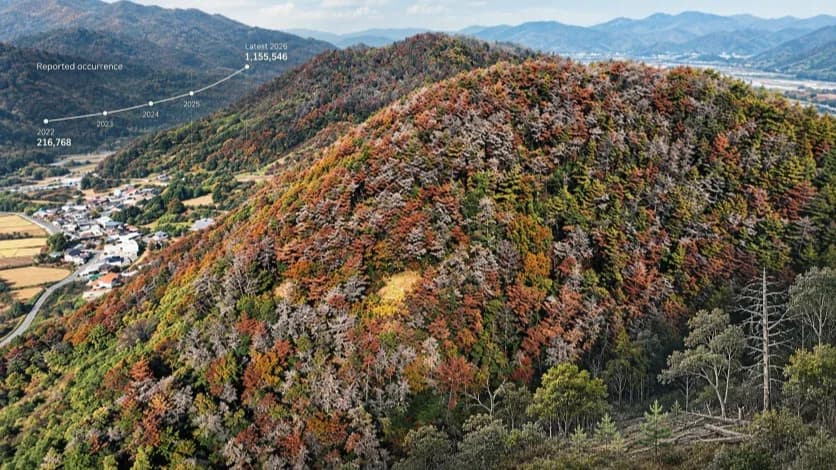 NewsSep 30, 2026
Gyeongnam’s Pine-Wilt Surge Is Forcing a Shift From Tree Removal to Forest Management
Gyeongnam’s pine-wilt outbreak has grown beyond a tree-removal problem. As re...
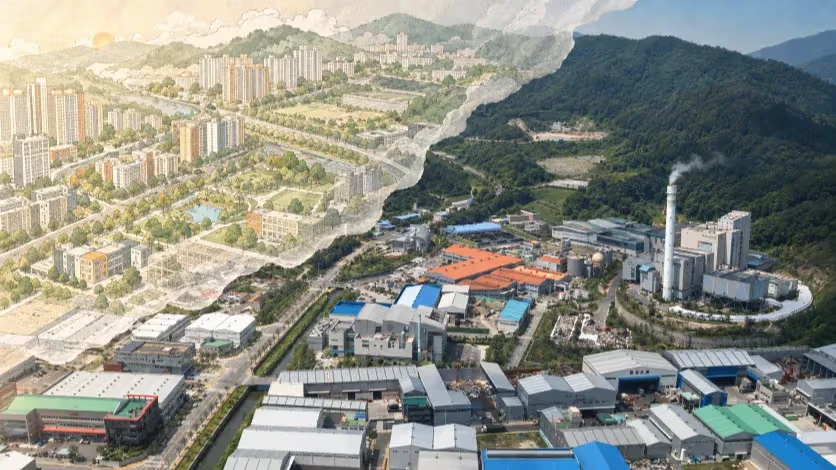 NewsSep 22, 2026
Busan Is Growing Westward as Its Waste Infrastructure Stays Put
Busan’s proposed Saenggok incinerator has moved from 800 to 500 tons a day. T...
 NewsAug 2, 2026
The City Built on Tomorrow’s Buyers
Busan’s apartment-led growth delivered housing and urban renewal at extraordi...
More from the author
More from this byline
Stay with the same line of reporting through more work from this byline.
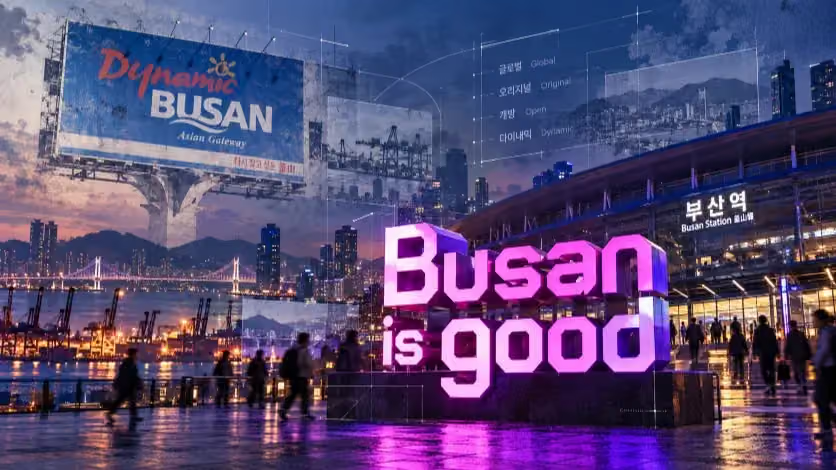 NewsOct 9, 2026
Why “Busan Is Good” Falls Short as a City Brand
 NewsSep 18, 2026
The Other AI Race Is for the Freedom to Change Course
Reader Signal
Community readWhat did this report leave you with?
Choose the signal that best reflects your reading. Select it again to remove it.
One response per article
No response selected
A moderated conversation about the reporting.
One-level replies and newsroom moderation keep the conversation anchored to this article.
Discussion Status
Open
Please sign in to join the discussion.
Newsletter
Weekly reporting and context from Busan and Korea.