South Korea's Exports Decline for Sixth Consecutive Month Amid Economic Slowdown
South Korea's exports experienced a decline for the sixth straight month in March, primarily due to weakened global demand for semiconductors in the face of an economic slowdown. According to the Ministry of Trade, Industry and Energy, the country has now faced a trade deficit for 13 consecutive months. In March, outbound shipments dropped 13.6% on-year to $55.12 billion. Since October last year, exports have fallen as major economies have tightened monetary policies to curb inflation. The down


South Korea's exports experienced a decline for the sixth straight month in March, primarily due to weakened global demand for semiconductors in the face of an economic slowdown. According to the Ministry of Trade, Industry and Energy, the country has now faced a trade deficit for 13 consecutive months. In March, outbound shipments dropped 13.6% on-year to $55.12 billion.
Since October last year, exports have fallen as major economies have tightened monetary policies to curb inflation. The downturn is the first time since 2020 that exports have decreased for six months in a row. Semiconductor exports, South Korea's primary export item, plunged 34.5% in March due to reduced demand and declining chip prices.
A high base effect also contributed to the decline, as exports reached an all-time high of $63.8 billion in March 2022. Despite the decrease, export value surpassed $55 billion for the first time in six months. Imports fell 6.4% on-year to $59.75 billion in March, leading to a trade deficit of $4.62 billion.
South Korea has recorded a trade deficit every month since April last year due to high energy prices, marking the first time the country has experienced a deficit for 13 consecutive months since 1997. The trade deficit for the first quarter of 2023 is already more than half of the total losses reported for 2022, which saw the country's largest trade deficit ever at $47.8 billion.
Industry Minister Lee Chang-yang acknowledged the challenges in exports due to global economic slowdown and financial sector uncertainties. The government aims to bolster exports and reduce trade deficits through policy financing, tailored industry support measures, and assistance for smaller firms entering overseas markets. The 2023 export target is set at $685 billion, a 0.2% increase from 2022, despite the finance ministry's earlier prediction of a 4.5% on-year decline.
Continue this reporting
Reporting on the same issue
Related coverage selected from the article's desk, topics and newsroom relationships.
 NewsSep 21, 2026
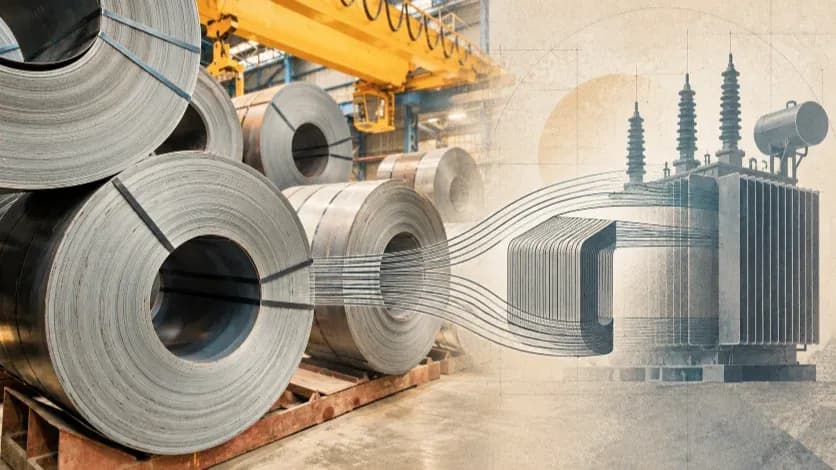
Europe’s Electrical-Steel Safeguard Now Reaches Inside the Transformer
A new EU safeguard follows electrical steel into certain finished transformer...
 NewsSep 14, 2026
Foreign Tourist Spending Is Reshaping Busan’s Nampo District
Foreign spending is making long-empty commercial space valuable again in Namp...
 NewsSep 11, 2026
Busan-Jinhae’s New Industrial Strategy Meets a Jobs Divide
As BJFEZ prepares to add AI, data and advanced energy to its industrial prior...
More from the author
More from this byline
Stay with the same line of reporting through more work from this byline.
 NewsSep 18, 2026
The Other AI Race Is for the Freedom to Change Course
 NewsSep 5, 2026
How a Political Appointment Becomes a Judgment of Character
Editorial Record
Corrections, sourcing notes and newsroom disclosures remain part of the published record. View Newsroom Notes →
Reader Signal
Community readWhat did this report leave you with?
Choose the signal that best reflects your reading. Select it again to remove it.
One response per article
No response selected
A moderated conversation about the reporting.
One-level replies and newsroom moderation keep the conversation anchored to this article.
Discussion Status
Open
Please sign in to join the discussion.
Newsletter
Weekly reporting and context from Busan and Korea.