Busan’s Finished Homes, Unfinished Projects
Busan’s unsold homes sit in one monthly total, but they belong to very different stages of the housing cycle. Following projects from presale to completion, discounting and PF recovery shows why the path of each development can matter as much as the number of homes left unsold.


At the end of July, the latest period for which official data are available, Busan had 8,379 unsold homes, including 3,253 that were already complete. Behind that total are developments conceived years apart, households comparing very different alternatives, and financing deadlines that can arrive before sales catch up.
By the fifth auction round, the minimum bid for 486 newly completed apartments in Busan had fallen to 354 billion won. There was still no bidder. The homes belonged to Gaya Station Lotte Castle Skyel, a 725-unit apartment complex in Busanjin District completed in January. Just over a year after the development entered the new-home market, 486 apartments were being offered together in a single public auction.
Presales had begun in July 2025. By 2026, sales marketing was advertising price reductions of as much as 19 percent, along with free options and other incentives intended to move the remaining homes. Months later, the developer failed to repay principal and interest when its real estate project-finance loan matured, and lenders turned to the unsold units as part of the recovery process. By late August, five auction rounds had failed, the developer had sought court-led rehabilitation, and Lotte Engineering & Construction was still trying to recover more than 100 billion won in construction receivables.
Gaya sits at an unusually advanced stage of Busan’s unsold-housing problem. The citywide statistics do not show that other unsold developments are in rehabilitation or creditor-led disposal, and the project should not be treated as representative of their legal or financial condition. Its value as a case lies elsewhere: a home moved from a unit marketed to a household, to discounted stock, to a completed apartment still waiting for a purchaser, and eventually to an asset caught up in debt repayment. The apartment itself changed little along that path; the economic relationships around it changed completely.
In the monthly data, a new listing and a finished apartment count the same
Busan had 8,379 unsold homes at the end of July, up from 8,071 a month earlier and 4,720 at the end of 2024. The total is large enough to invite a familiar explanation: the city has more new housing than households are willing or able to absorb. Yet 3,253 of those homes had already been completed, while the rest remained at earlier stages of development. Nearly 39 percent of Busan’s unsold stock therefore consisted of finished homes for which construction was no longer the unresolved part of the story.
A home placed on sale a few weeks ago and one that has remained unsold after completion can appear side by side in the same government table. Both count as one unsold unit, even though one development may still be moving through an ordinary sales period while another has already tested lower prices, richer incentives and months of additional selling time. The official total captures the stock at a given moment but not the path each unit took to get there. That path becomes increasingly important as the months accumulate.
One monthly total, two different stages
The official unsold count places newly marketed homes and completed homes inside the same headline number.
Source: official monthly housing statistics cited in the article. Earlier-stage inventory is calculated as total unsold minus completed-and-unsold. Percentages: Breeze in Busan calculations.
Busan had 882 completed unsold homes at the end of 2023, 1,886 at the end of 2024 and 2,593 at the end of 2025. By July 2026, the number had reached 3,253. A small decline from the previous month does little to erase the accumulation over the preceding two and a half years. The city is no longer dealing only with fresh supply that needs more time to find purchasers.
The completed stock has been accumulating
A small monthly decline does not erase the larger increase in homes that have already crossed the construction finish line.
Source: official housing statistics as reported in the article. Change and multiple: Breeze in Busan calculations. The observations are year-end snapshots except July 2026.
The geography of that stock is uneven. Gangseo’s unsold homes are tied heavily to a newer wave of construction in and around Eco Delta City, where much of the recent supply remains within a longer development and occupancy cycle. Other parts of Busan carry an older tail of completed homes, while Busanjin contains both redevelopment schemes that sold quickly and a large concentration of finished new-home stock. One citywide number therefore combines homes that differ not only by location, but by age, product and position in the development cycle.
Administrative boundaries do not resolve those differences. A district gaining residents can accumulate unsold new homes, and two developments in the same district can produce sharply different sales outcomes. The more revealing questions sit closer to the individual scheme: when it was conceived, what kind of housing it added, what alternatives households had when sales opened, and how far construction had progressed when demand proved weaker than expected. Recent supply in a developing new city and homes left unsold long after completion can belong to the same monthly total without representing the same condition.
Gaya makes the later stage visible. The apartments can be inspected and occupied as finished real estate; uncertainty over whether the building itself will be delivered has largely disappeared. Sales remain unresolved, and so does the question of whether the financing behind the development can wait for the remaining homes to turn into cash. Finishing the building and finishing the business of the building are not necessarily the same event.
Housing is built on a much longer clock than the monthly statistics used to measure it. Land has to be assembled, approvals secured, financing arranged, construction started and sales launched before a household finally makes a decision. The homes competing for purchasers in Busan in 2026 were shaped by choices made across several earlier markets. Gaya provides a way back into one of them.
The homes reaching buyers now were years in the making
Gaya did not begin in the market that eventually rejected so much of its supply. The development process stretched across several years before the apartments were completed in early 2026, while the sales launch itself came only in July 2025. Land assembly, approvals, financing and construction had already carried the scheme through very different housing and credit conditions before households were finally asked to commit. Prices, borrowing costs and competing homes all had time to change along the way.
A development cycle that long carries assumptions forward. Decisions about land, construction, financing and the revenue needed to make the numbers work are made before contracts are signed, sometimes years before. The eventual purchaser encounters a different set of facts: homes already available nearby, new developments launched since the original plan was drawn up, mortgage costs at the moment of purchase and the amount of money required to choose one neighborhood over another. The address can remain fixed while the conditions surrounding it change repeatedly.
Redevelopment makes that exposure especially visible. In Eomgung, a long-running redevelopment scheme passed through repeated revisions before its recent sales phase, and disclosed construction contract amounts were revised materially upward over the life of the scheme. Changes in scale, scope and contractual terms mean that the increase cannot be read as a clean measure of construction-cost inflation. It does show how much the economics attached to a long-cycle development can change before households encounter the finished proposition.
The passage of years changes both sides of the eventual sale. Households arrive with a new set of alternatives, while the development may arrive carrying a cost structure very different from the one imagined earlier. Land has already been committed, construction costs have been incurred, financing has accumulated a price, and a building approaching completion has far less freedom to reinvent itself than it did on paper. Housing conditions can change faster than the homes being built for them.
Two prices begin to pull against each other. One is implicit in the economics of the development—the level of revenue needed to recover land, construction, financing and other costs on acceptable terms. The other is the level at which enough households in the current market are actually willing to transact. A developer can narrow the gap through price reductions, included options, smaller deposits or financing support, but every concession alters the economics inherited from the years before sales.
Weak demand therefore cannot always be solved by an arbitrarily large discount. Lower prices may accelerate sales while reducing margins and, beyond some point, the problem becomes less about protecting profit than about satisfying debt, construction bills and other claims on money already committed. Households have no obligation to reimburse a developer for assumptions made years earlier. They compare the home with what the same budget can buy now.
Gaya reached that confrontation with a headline price that drew immediate attention. The highest initial price for an 84-square-meter unit was 928 million won, with balcony expansion, system air conditioning and several built-in options included in the package. The original payment structure required 5 percent at contract, another 15 percent in interim payments and the remaining 80 percent later in the purchase process. From the beginning, the proposition involved more than the number printed at the top of the price sheet.
The initial sales response still left substantial supply behind. A later no-priority offering followed, and the sales campaign became progressively more aggressive as completion approached and passed. Those adjustments were repeated attempts to find the combination of price and terms at which enough households would commit. Another development only a short distance away received a very different answer.
Similar prices, very different answers from the market
Yangjeong Lotte Castle Frontier, another Lotte Castle development in Busanjin District, confronted households with a remarkably similar headline number a year earlier. The top presale price for an 84-square-meter unit reached 926 million won, close to Gaya’s 928 million won. Yangjeong contained 903 homes, including 489 offered through the general presale, and purchasers were committing years before its planned 2027 occupancy. Similar sticker prices led to very different sales trajectories.
Yangjeong drew 2,374 first-round applications for 301 units available in that round, an average of 7.9 applicants per unit. Lotte Engineering & Construction later said all general-sale contracts had been signed roughly two months after the formal contract period began. The apartments were therefore largely absorbed well before the buildings themselves were ready for occupancy. Gaya reached physical completion with hundreds of homes still unsold and later moved 486 apartments into a bulk auction.
Similar sticker prices, opposite sales trajectories
Price was close. The developments reached households in different places, products, schedules and market conditions.
Sources and figures: as cited in the article. The comparison is descriptive; it does not isolate price as the cause of the different outcomes.
Price still mattered, but the developments were never perfect substitutes. They differed in neighborhood context, surrounding housing stock, product configuration, sales timing, completion schedule and the alternatives available when households were asked to commit. Yangjeong sits near Line 1’s Yangjeong Station in an established urban area with schools, public offices, medical facilities and retail already surrounding it. Gaya also carried a location argument beside Gaya Station on Line 2, yet subway access alone did not make the two propositions equivalent.
A new apartment competes with more than the new apartment opening down the road. Existing homes may be available immediately, another redevelopment may offer a different move-in date, and established neighborhoods can provide schools and services that require no forecast of what will eventually arrive. Price acquires meaning through those alternatives. Calling a development “too expensive” can point in the right direction while leaving the harder question unanswered: too expensive relative to what?
Incentives make the comparison harder to read from posted prices alone. A direct reduction changes the number on the contract, while free options, financing support and altered payment schedules can lower the effective burden without producing the same visible cut. Gaya’s later campaign therefore amounted to more than a string of promotions. Each concession was another effort to move the homes closer to the terms households would accept before the development lost more room to wait.
Yangjeong offers the reverse sequence. Its general-sale homes were contracted years before residents were scheduled to move in, allowing sales to run ahead of construction. Gaya completed the building first and continued searching for an economic exit afterward. Busan contains both conditions at once, which makes household choices inside individual submarkets more revealing than a citywide measure of demand alone.
In Eco Delta City, buyers are pricing the wait
Population movement makes a simple story of disappearing demand difficult to sustain. In 2025, only two of Busan’s 16 districts and counties recorded net population inflows: Gangseo gained 7,105 residents and Busanjin gained 7,128. Housing was the largest positive reason for migration in both places, accounting for a net inflow of 5,618 people in Gangseo and 4,773 in Busanjin. Both districts subsequently appeared among the city’s largest concentrations of unsold new homes.
Households were moving into those districts for housing reasons while particular developments were failing to clear their remaining supply. A household entering a district can rent, buy an existing apartment, choose another presale, move into a recently completed building or remain where it is while waiting for better terms. New housing competes for demand rather than inheriting it automatically. Migration tells us that people are arriving; it does not tell us which home they will choose.
Money imposes another filter between interest and a completed purchase. Gaya’s payment structure left most of the purchase price until later in the transaction. Mortgage capacity can change before then, and some households may need to sell an existing home or assemble funds from other sources before completing a purchase. The available Busan project data do not show how often those constraints caused individual buyers to step away, but an application, a signed contract, a final payment and occupancy remain different stages of absorption rather than interchangeable measures of demand.
Gangseo offers another setting in which to see that selectivity. Much of its recent housing growth is concentrated in Busan Eco Delta City, where housing and the urban fabric around it have been arriving over a long development period rather than all at once. Housing itself has already helped draw thousands of people into the district. Each new release still has to compete on price, unit size, payment structure and the point in the city’s build-out at which the household is being asked to buy.
Early Eco Delta developments showed how strong demand could be under favorable terms. Eco Delta City Prugio Center Park supplied 972 homes and reached a 99.1 percent contract rate before the remaining nine units were offered through a no-priority round, which then drew 885 applications. Across three public-sale blocks totaling 2,781 homes, the Busan Metropolitan Corporation later said every unit had been contracted. The homes were sold under a price-cap framework that placed average prices below surrounding market levels.
Those households were buying into a city that was still being built. Their contracts show that incomplete urban development alone did not prevent buyers from committing when the broader proposition was attractive enough. Price, timing and expectations of future value were being considered together. As more of the city arrived and more alternatives became available, the comparison facing later purchasers changed as well.
By 2026, earlier Eco Delta developments were moving closer to occupancy and more housing had entered the wider supply pipeline. A fresh presale competed not only with established neighborhoods elsewhere but with previous phases of the same new city at different stages of delivery. A household entering the market at that point was buying into a different competitive landscape from one that had signed during the earliest public-sale wave. The same place name did not guarantee the same sales environment.
Jungheung S-Class River City entered that later environment in June 2026 with 501 apartments, all 59 square meters, and occupancy scheduled for 2029. Special supply drew 17 applications for 325 available places, while the first general application round drew 38 applications for 484 homes. Those numbers were far weaker than the early public-sale wave, although initial applications cannot be treated as the final contract result and the developments differ in product, timing and pricing structure.
The same district did not present the same proposition
Early public-sale demand and a later private-sale launch occurred under different product, timing and pricing conditions.
Sources and figures: as cited in the article. Application counts are not treated as final contract outcomes, and the two developments are not a like-for-like experiment.
Waiting itself still has an economic value. A transport connection expected in the future is different from one a resident can use today. A school that will open later is different from one a child can attend now, and planned commercial space is different from a neighborhood where everyday services are already operating. Buyers may value future improvements, but the amount they will pay for them depends partly on how long they must wait and what alternatives exist in the meantime.
The early public-sale wave entered the market with a visible price advantage that could compensate for some of that delay. A later release has to compete against a larger and more mature set of alternatives, including earlier Eco Delta phases themselves. The available data cannot tell us how much early demand came from future residents and how much reflected expectations of price appreciation. Any claim that a changing owner-occupier or investment mix caused weaker later demand would require additional reporting.
Gangseo nonetheless places a clear boundary around the analysis. Thousands of people moved into the district for housing reasons while some recent developments struggled to attract applicants, and earlier Eco Delta projects had already shown that the same broad area could absorb large volumes under different terms. Busanjin presents a parallel pattern from an established part of the city: housing-driven migration, rapid contracting at Yangjeong and substantial completed stock at Gaya existed at the same time. District-level demand cannot explain individual outcomes on its own.
A newly launched development may simply be finding its audience. One that changes its terms repeatedly and reaches completion with hundreds of homes remaining has received a much longer series of answers from households. By then, the passing months are changing more than the number of units left in a government table. They are changing the economic condition of the development behind them.
Construction can end before the project does
Busan’s 3,253 completed but unsold homes occupy a different position from developments that have only recently entered the sales process. Construction has already consumed most of the time and money needed to create those apartments. The unresolved task is converting finished homes into completed transactions and the cash that follows. A newly launched development still has much of its sales period ahead of it; a completed building has far less ability to change what has already been built.
Yangjeong and Gaya reached those two finish lines in the opposite order. Yangjeong converted its general-sale homes into contracts years before the scheduled move-in date, allowing sales to run ahead of construction. Gaya finished the building with hundreds of apartments still waiting for purchasers. In one case, much of the sales question was resolved while the structure was going up; in the other, construction ended while the commercial question remained open.
A finished building can remain part of an unfinished financial transaction. Sales proceeds still have to arrive, PF debt has to be repaid according to its terms, construction bills have to be settled and other claims have to be resolved. Presales produce cash in stages rather than all at once, while land, construction and financing consume money throughout the development cycle. When a large share of homes remains unsold or expected payments arrive later than planned, someone has to carry the gap.
Waiting costs more than interest. Completed homes can keep large amounts of money tied up in assets that have already incurred most of their development cost, while construction receivables and other claims remain outstanding. Additional incentives may be needed to accelerate sales, reducing what is recovered from each unit. A problem that begins with finding purchasers can gradually become one of preserving value while cash needed elsewhere arrives later than expected.
Gaya reached that stage visibly. Reporting on the development’s financing shows that the developer failed to repay principal and interest when its PF loan matured in July. Lenders subsequently treated the loan as being in default, and 486 apartments were placed into a bulk public auction. Five auction rounds failed to produce a bidder, the developer sought court-led rehabilitation and Lotte Engineering & Construction still faced more than 100 billion won in outstanding construction receivables. By then, the central problem had moved beyond persuading another household to sign a contract.
The auction changed the transaction itself. A normal presale divides a development into individual homes and asks households whether one apartment is worth buying. A bulk auction packages hundreds of homes into a much larger asset and asks another kind of purchaser what the pool is worth as a whole. Household sales are intended to complete the original development plan; creditor-led disposal can become an attempt to recover money already lent or owed.
Gaya represents a late-stage form of PF stress rather than a template for every troubled development. Some schemes fail earlier when bridge financing cannot be converted into longer-term construction funding, while others encounter cost, guarantee or refinancing problems during construction. Gaya matters here because the stress remained after the physical asset had already been delivered. The unfinished part was no longer the building; it was the money behind it.
South Korea’s wider PF market gives that case necessary perspective. Total exposure has been declining while regulators continue to restructure weaker developments and keep financing available for those judged viable. Unsold housing therefore does not automatically indicate PF distress. Collateral value, the share already sold, loan maturity, claim priority and the cash that can realistically be generated from the remaining homes all shape what happens inside an individual financing structure.
A household can decide that the current terms are unattractive and wait for another opportunity. It may renew a lease, purchase an existing home or choose another development, absorbing costs of its own along the way. A financing maturity offers much less freedom to wait for a friendlier market. The date on which households might eventually clear the remaining homes and the date on which cash is required can drift apart.
Gaya shows what happens when that gap becomes acute. Discounts and incentives sought to accelerate household sales, but the financing timetable continued independently of those efforts. When the loan matured without repayment, the development moved into another route of disposal; when repeated auctions failed, even that route did not immediately create liquidity. Price discovery continued after construction had ended and after the original financing schedule had already broken down.
The building finished. The sales and financing clocks did not.
Gaya’s chronology shows how a completed apartment can keep moving through a different economic sequence after construction ends.
Sources and chronology: as reported in the article. The rails distinguish physical completion, household sales and financing/recovery; they are explanatory stages, not a project cash-flow statement.
Most of Busan’s completed unsold homes are not shown by the available statistics to be in that condition. Some may clear through ordinary sales, others may require more time or better terms, and the citywide data alone cannot identify which developments carry material financial stress. The importance of the completed stock lies instead in how much of Busan’s unsold housing has already crossed the point where construction itself can explain the delay. A different set of choices is being made at the other end of the supply pipeline.
Busan is clearing one housing cycle while deciding the next
Busan’s unsold homes are not aging at the same rate across the city. Gangseo carries a newer wave of supply still moving through construction and occupancy, while other districts hold an older tail of completed homes. Busanjin contains developments that contracted rapidly before completion alongside one that moved from retail sales into auction and rehabilitation. The 8,379-home total captures several stages of adjustment at once.
The pipeline feeding future supply is moving differently. Busan approved 6,262 homes from January through July, 56.6 percent fewer than the 14,426 approved during the same period in 2025. The national decline over the same period was much smaller. Existing stock and new approvals are moving in opposite directions because they record choices made at different moments.
A completed apartment is the result of land purchases, approvals, financing and construction commitments made years earlier. A scheme at the approval or early financing stage retains more room to change course. Its launch can be delayed, its scale revised, its financing reconsidered or the investment abandoned before the same amount of money becomes difficult to recover. Housing supply can therefore begin adjusting through projects that are never built even while older apartments remain visible in the unsold count.
Financing policy is moving in two directions at once. Regulators are continuing to restructure weaker PF exposures while expanding guarantees and funding intended to keep viable housing developments moving. A longer-term regime that gives greater weight to developer equity remains part of the regulatory framework, but its application to residential developments has been temporarily deferred for two years as the government seeks to support housing supply; the planned 2027 introduction remains in place for nonresidential developments. The financing environment facing the next generation of housing will therefore depend not simply on whether credit is tighter or looser, but on which developments lenders and policymakers are prepared to keep moving.
The 56.6 percent fall in approvals cannot be attributed to unsold housing alone. Land prices, interest rates, construction expenses, redevelopment schedules, regulation and the timing of individual developments can all alter the annual total, while an approval itself does not guarantee that construction will follow. Nor does the decline establish that Busan is heading toward a future shortage. It shows that the homes already on sale and those still preparing to enter the pipeline belong to different stages of adjustment.
Developers and lenders provide a possible link between those stages, but the link still requires direct reporting in Busan. Slower sales can affect land purchases, launch dates, project scale and the amount of equity a developer is willing to commit, while lenders can consider local absorption rates, completed stock and previous presale performance when deciding how much leverage a new development can support. The approval data by themselves do not show that those decisions have already changed because of current unsold inventory. Establishing that feedback would require evidence from the people making the next round of investment and lending decisions.
Gaya has already traveled unusually far through the other end of that sequence. It began as a set of assumptions about land, construction, financing and future households; in 2025 it became a new-home offering, and in early 2026 a finished apartment complex with substantial supply remaining. By summer, 486 homes were being offered together in an auction after the financing timetable had moved beyond the pace of household sales. The building did not move. The market around it did, and the economic question attached to the building changed with it.
The same apartments were first future homes, then retail stock, then completed assets whose sale had become entangled with loan repayment and construction receivables. Monthly unsold statistics cannot show that progression on their own. They record where a unit stands at one moment without recording all the decisions, concessions and financial deadlines that brought it there. Following one development across the years reveals a history that the monthly count compresses into a single number.
Most of Busan’s unsold homes cannot be assumed to follow Gaya’s path. Their trajectories will diverge as some supply finds buyers, some takes longer to clear and individual developments encounter very different financial constraints. Busan is still selling homes produced from decisions made under earlier assumptions while developers and lenders decide which new plans deserve land, equity and credit. By the time those choices appear as completed homes in a monthly housing statistic, the market around them may have changed again.
Continue this reporting
Reporting on the same issue
Related coverage selected from the article's desk, topics and newsroom relationships.
 NewsSep 16, 2026
Busan’s Young-Adult Migration Turns Sharply at 25–29
Busan can still draw young adults into the city, but keeping them becomes far...
 NewsSep 15, 2026
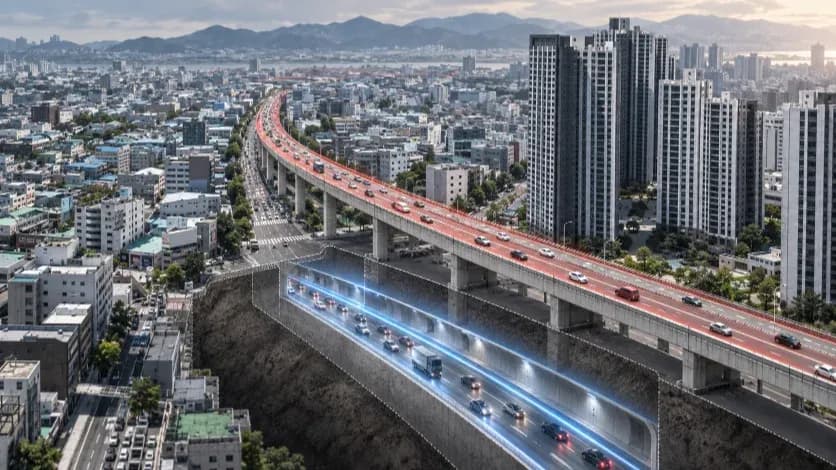
Busan’s Sasang–Haeundae Expressway Will Reshape the Dongseo Corridor
Busan is preparing a 21.7-kilometer underground expressway between Sasang and...
 NewsSep 13, 2026
Busan Universities Enter 2027 With New Rules on Tuition, Funding and Size
Busan’s university market is being reshaped by tuition support, concentrated...
More from the author
More from this byline
Stay with the same line of reporting through more work from this byline.
 NewsSep 14, 2026
Foreign Tourist Spending Is Reshaping Busan’s Nampo District
 NewsSep 11, 2026
Busan-Jinhae’s New Industrial Strategy Meets a Jobs Divide
Editorial Record
Corrections, sourcing notes and newsroom disclosures remain part of the published record. View Newsroom Notes →
Reader Signal
Community readWhat did this report leave you with?
Choose the signal that best reflects your reading. Select it again to remove it.
One response per article
No response selected
A moderated conversation about the reporting.
One-level replies and newsroom moderation keep the conversation anchored to this article.
Discussion Status
Open
Please sign in to join the discussion.
Newsletter
Weekly reporting and context from Busan and Korea.