Debt, Demographics, and Divergence: Why Korea Risks a Split Housing Economy
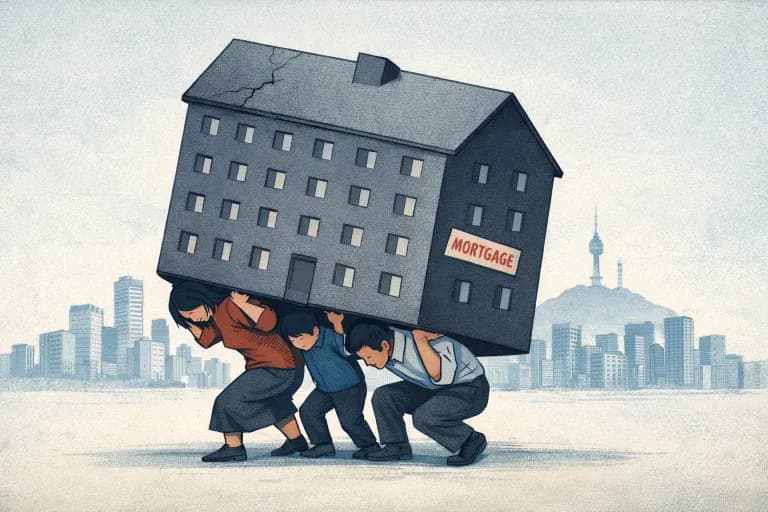
Korea’s households carry one of the heaviest debt loads in the OECD, with most mortgages tied to floating rates. That fragility makes the economy hypersensitive to policy shifts and sustains property speculation even as consumption weakens and provincial vacancies mount.

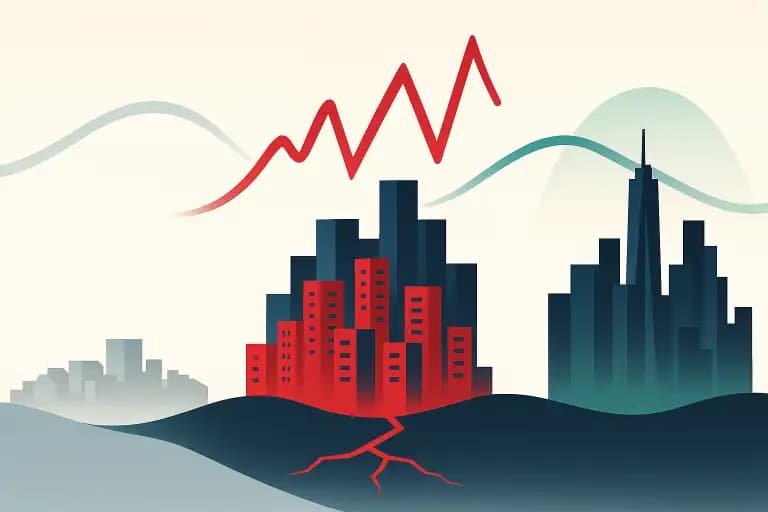
The Bank of Japan is moving toward its first significant tightening cycle in nearly two decades. While the policy rate remains at 0.5 percent, dissent at the September meeting and market pricing both suggest an increase as early as October. Former board member Makoto Sakurai has projected a path toward 1.5 percent before Governor Kazuo Ueda leaves office in 2028. Yields on ten-year government bonds already reflect this shift, rising to their highest since 2008.
The Federal Reserve, by contrast, has moved into easing. Its September cut of 25 basis points lowered the federal funds target to 4.00–4.25 percent, with futures implying a further reduction within six months. The divergence between Japan and the United States is altering global capital flows, compressing interest differentials and setting the yen on a firmer course.
Korea’s position is defined by leverage. The Bank of Korea’s base rate has been held at 2.50 percent, but the number understates the transmission effect. Household debt has surpassed 105 percent of GDP—one of the highest ratios in the OECD. Crucially, more than 70 percent of mortgages are variable-rate or short-reset. By contrast, in the United States nearly 90 percent of loans are locked at 30-year fixed rates. The result is that Korean households absorb monetary policy in real time, without the buffer enjoyed elsewhere.
This fragility explains the paradox in sentiment surveys. The consumer confidence index fell to 110.1 in September, reflecting weaker expectations for income and spending. Yet the housing outlook index remained above 110, pointing to continued belief in property appreciation. Households are cutting consumption but sustaining mortgages—a choice that depresses demand in shops while keeping apartment markets buoyant.
The imbalance is geographic as well as structural. In Seoul, apartment prices remain elevated, with mid-sized units above 1.4 billion won. In contrast, provincial real estate stagnates. Nationwide commercial vacancy rates hover around 13 percent; in Busan, the figure exceeds 20 percent, while some districts in Daegu approach 30 percent. Japan experienced similar divergences in the 1990s, but the contraction there was nationwide. Korea faces partial Japanification: a capital region still inflating, provinces quietly deflating.
Policy responses have reinforced rather than resolved the divide. Construction spending continues to serve as the default stimulus: new housing, redevelopment, infrastructure. In provinces with declining populations, supply has outstripped demand, leaving new towers partially empty. In Seoul, cranes add inventory but do not relieve household debt or revive discretionary spending. The experience of Japan’s “bridges to nowhere” shows how easily visible stimulus can turn into fiscal burden when demographics and demand fail to align.
The scenarios ahead hinge on global and domestic shifts. If the BOJ raises rates in October, the yen will strengthen, narrowing Korea’s export competitiveness and pulling capital toward Japan. If the Fed continues to cut, the dollar may weaken and ease external pressure on the won, but Korea’s leverage mechanics will remain. At home, persistent retail vacancies and weak consumption could erode bank balance sheets, creating second-order risks beyond the housing market.
The risk is not immediate crisis but structural entrenchment. Households continue to defer purchases while sustaining property investment, provinces lose vitality, and policymakers return to construction as default remedy. Over time, the divide between the capital and the periphery becomes institutionalized.
Korea will not replay Japan’s lost decades in full, but fragments of that path are already visible. The challenge is to shift investment away from property as both household balance sheet and national growth driver. Without structural diversification—into services, technology, and community infrastructure—new buildings will continue to rise while the streets beneath them fall quiet.
The Weekly Breeze
Keep pace with Busan's deep narratives.
Delivered every Monday morning.