Busan Maritime Court Faces a Harder Test Before 2028
South Korea’s new Maritime and International Commercial Courts will open in Busan and Incheon in 2028. Busan has the stronger maritime case. What remains unclear is whether it can build the lawyers, services and case flow needed to make the institution function as a real market.

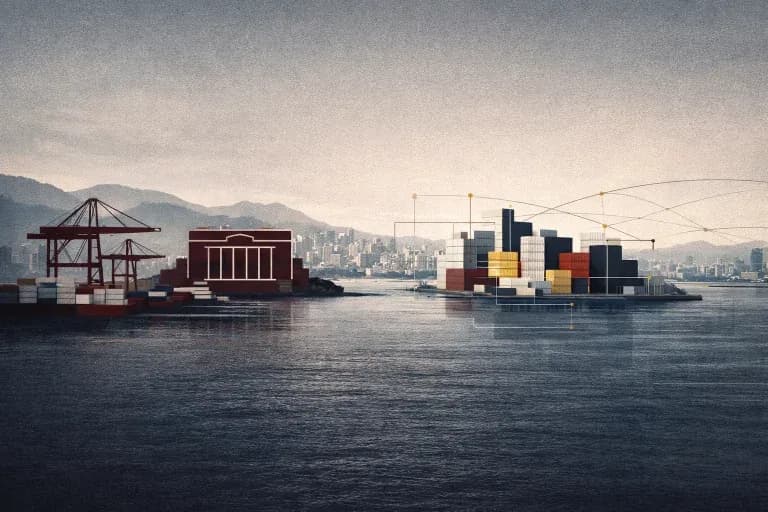
South Korea’s decision to open Maritime and International Commercial Courts in Busan and Incheon on March 1, 2028, settled one question and sharpened another. It settled the long-running argument over whether the country needed a specialist forum for maritime and cross-border commercial disputes. It did not settle where the real centre of gravity will lie once the court begins operating. The law created a dual-site institution from the outset. Busan was given the southern docket, covering South Korea’s Gyeongsang and Jeolla regions, as well as Jeju. Incheon was assigned the capital region, Gangwon and Chungcheong. That arrangement matters because it prevents Busan from treating the court as an exclusive institutional prize. It gives Busan formal status, but not a monopoly over the market the court is meant to attract.
On paper, Busan has the stronger maritime case. Its claim is grounded in port volume, shipping concentration and the broader institutional language of a city that has long presented itself as Korea’s maritime capital. Official data show Busan handled 24.88 million TEU in 2025, another record year. That scale gives the city an obvious claim to traditional maritime disputes: carriage claims, charterparty disputes, marine insurance litigation, cargo damage, vessel arrest, port-related claims and administrative cases tied to maritime regulation. In that narrower sense, Busan is not an arbitrary choice. It is the most natural maritime seat in the country.
Yet the court is not only maritime. It is also international commercial. That is where Busan’s argument begins to narrow.
Busan has the stronger maritime logic
If Busan’s argument is stripped of local rhetoric, it remains substantial. The case for the city does not begin with symbolism. It begins with cargo, shipping concentration and jurisdictional fit. The structure of the new court reinforces that logic. Under the arrangement approved by the National Assembly, the Busan court will hear the southern docket, while Incheon will cover the capital region and the country’s central provinces. That split is not incidental. It assigns Busan the part of the country where much of the southern coastal economy, port activity and maritime administration naturally converge. The legal geography therefore tracks the industrial one more closely in Busan’s case than it does in Incheon’s. The city is not merely hosting a court within its borders. It has been assigned the maritime half of the country’s new judicial map.
That is also why Busan’s internal siting debate has gravitated toward places that express more than convenience. Public reporting has identified North Port redevelopment, the Busan New Port hinterland, and the BIFC area as the main candidate zones, with North Port now the most frequently cited front-runner. The preference is revealing. North Port is attractive not simply because land is available, but because it links several strands of Busan’s claim at once: proximity to Busan Station, alignment with the city’s waterfront redevelopment strategy, and growing institutional proximity to the Ministry of Oceans and Fisheries, whose relocation to Busan is expected to increase the administrative dimension of maritime cases. In other words, the site discussion has already begun to take shape around a larger institutional cluster rather than a courthouse in isolation.
Seen from that angle, Busan’s advantage is not only port scale. It is the coherence of the maritime setting itself. Shipping, port operations, marine administration and related claims already form part of the city’s working environment. That gives Busan a kind of legal plausibility that is difficult to manufacture by designation alone. It is one thing to place a court in a city with access to corporate demand. It is another to place it in a city where maritime disputes already fit the surrounding economy with very little explanation. That does not mean Busan automatically becomes the dominant forum once the court opens. It does mean the city starts with the stronger underlying case in traditional maritime work.
But that strength has clear limits. Busan’s maritime case is strongest precisely where the court is narrowest: in classic shipping and admiralty-type disputes. The broader the institution is understood to be, and the law expressly makes it a court for international commercial disputes as well, the less decisive port logic becomes on its own. Maritime volume can justify Busan’s place in the system. It cannot, by itself, guarantee Busan primacy within it. That is where the analysis has to move beyond maritime legitimacy and into market structure.
Incheon changes the equation
If Busan makes the cleaner maritime case, Incheon makes the more difficult commercial one. The distinction matters because the new institution is not a maritime court in the narrow sense. It was created as a Maritime and International Commercial Court, with jurisdiction extending beyond classic shipping and admiralty disputes into cross-border business litigation. That change in scope alters the geography of advantage. Port activity helps explain why Busan belongs in the system. It does not, on its own, explain why Busan should dominate the court’s most commercially valuable work.
Incheon’s official case rests on exactly that point. The city has argued that 64.2% of domestic shipping companies and about 80% of international logistics firms are concentrated in the capital region, and that the court’s location in Incheon would therefore improve access for the companies most likely to generate maritime and international commercial disputes. That is not simply a local government talking point. It is a statement about where instructions originate, where legal departments sit, where repeat corporate relationships are managed and where higher-value dispute work is most likely to be retained. In that respect, Incheon’s advantage is not symbolic. It is positional.
The jurisdictional design of the new courts reinforces that position. Incheon will cover Seoul, Gyeonggi, Gangwon, Daejeon, Sejong and the Chungcheong region, while Busan will cover Yeongnam, Honam and Jeju. On paper, that is a balanced territorial split. In practice, it gives Incheon access to the country’s densest corporate and legal hinterland. That is the crucial distinction. Busan’s jurisdiction follows maritime geography. Incheon’s follows commercial concentration. The former gives Busan a natural maritime narrative. The latter may give Incheon the stickier market.
That advantage is strengthened by a further point that has received less attention in local celebratory coverage. Incheon has explicitly said that parties may agree to have cases originating anywhere in the country heard in Incheon. Whether that clause becomes decisive will depend on how the court operates in practice. But the strategic logic is clear. In a system where party agreement, corporate convenience and legal adviser preference often shape forum choice, Incheon is not limited to the matters that arise naturally within its own region. It is positioning itself as the more accessible national gateway for disputes that could just as easily have been filed elsewhere.
This is the point at which Busan’s maritime advantage begins to narrow. For traditional shipping disputes, proximity to the port economy, the concentration of maritime institutions and the logic of the southern coastal docket all work in Busan’s favour. But international commercial litigation is rarely decided by maritime identity alone. It is shaped by where contracts are negotiated, where companies are headquartered, where outside counsel are retained, where financing and insurance relationships are managed, and where parties find it easiest to assemble representation. On those questions, the capital region remains the gravitational centre of the Korean legal market. Incheon does not need to surpass Busan in maritime symbolism to benefit from that fact. It only needs to remain attached to the deeper commercial geography around Seoul.
The Busan-Incheon comparison therefore should not be treated as a contest between a “real maritime city” and a less deserving rival. The more serious distinction is between two different kinds of institutional strength. Busan offers industrial legitimacy. Incheon offers transactional proximity. Busan’s case begins with ships, cargo and port administration. Incheon’s begins with companies, logistics operators, legal work and the capital region’s density of economic decision-making. Once the court is understood in its full statutory scope, those are not secondary differences. They define the competitive field.
Busan’s real constraint is not legal status, but market depth
If Busan’s strongest argument lies in maritime scale, its weakest lies in the thinner market that must support the new court once the ceremony is over. The problem is not difficult to define. A specialist court of this kind does not run on judges alone. It requires a working layer of maritime litigators, insurance counsel, ship-finance specialists, arbitration-capable practitioners, translators able to handle legal materials, and lawyers comfortable with foreign-law issues and English-language case preparation. Those are not symbolic assets. They are the operating conditions of a serious dispute-resolution venue. Busan may yet build them. What is harder to show, at least from the public record, is that they already exist at the scale the new court implies.
The imbalance is most visible in the legal profession itself. At its 2026 regular general meeting, the Busan Bar Association reported 1,216 registered members. That is not trivial in local terms. It is, however, modest when placed beside the scale of the Seoul-centred market. Reporting in February said the Seoul Bar Association had 29,061 members, accounting for roughly 76% of all members of the Korean Bar Association. The significance of that comparison lies less in raw headcount than in concentration. Specialised work tends to cluster where large corporate clients, outside counsel, repeat instructions and adjacent services already sit. In South Korea, that clustering still points overwhelmingly toward the capital region. Busan is therefore not simply competing with Incheon. It is competing with the deeper gravity of the Seoul legal market itself.
Busan’s own policymakers appear to understand the problem in those terms. In a 2025 city council audit, the municipal administration discussed the need to review the creation of a maritime legal support center, strengthen training programs for maritime and international commercial legal professionals in cooperation with local universities, and develop a Busan-specific administrative support structure for the court. That matters because it shows the city is not treating the court as a self-sufficient institution. It is already acknowledging that the designation of Busan as a site does not automatically produce the professional infrastructure the court will need. The gap is not being inferred from outside. It is being recognised within Busan’s own policy discussion.
The same pattern appears in the legal profession’s local response. The Busan Bar Association has established a special committee on the maritime court, and in March it hosted a practical lecture on ship enforcement and ship financeunder that committee’s name. That is a useful signal, but it should be read carefully. It suggests awareness and some degree of institutional mobilisation. It does not yet establish depth. A committee and a training event show intent. They do not by themselves show that Busan has a sufficiently large, durable pool of practitioners able to handle repeat maritime and international commercial disputes at a high level. The city is no longer starting from zero. It is still some distance from demonstrable market thickness.
That is where the discussion has to move beyond lawyers in the narrow sense. A maritime and international commercial court can only become a functioning forum if it sits inside a wider professional ecology. Busan does have pieces of that structure. The Korean Commercial Arbitration Board has a Busan branch in the Busan International Finance Center, and the broader BIFC ecosystem hosts finance-related institutions that, in principle, could support insurance, ship-finance and arbitration-linked work. But public evidence remains thinner on the harder question: whether these elements already operate together as a sufficiently active dispute-resolution market, rather than as adjacent institutions whose potential has yet to be fully integrated. That distinction is likely to matter far more than the final courthouse address.
KMOU gives Busan a base. It does not yet settle the pipeline question.
Any serious assessment of Busan’s readiness has to start with Korea Maritime & Ocean University. The city is not trying to build a maritime court in an academic vacuum. KMOU remains South Korea’s best-known specialist university in the maritime field, and its law faculty structure gives Busan an institutional advantage that no inland city could easily replicate. Public faculty profiles show expertise in maritime law, maritime insurance law, commercial law and international trade law. Professor Cheong Yeong Seok is listed as a specialist in maritime law and as a current arbitrator at both the Korean Commercial Arbitration Board and the Asia-Pacific Maritime Arbitration Center. Professor Ji Sang Gyu specialises in maritime law and maritime insurance law and previously worked in the legal teams of Heung-A Shipping and Hutchison terminal operations. Professor Chung Dae is listed in commercial law and international trade law. Taken together, that is not a token academic presence. It is a real maritime-law base with some visible connection to practice.
That matters because the court Busan is preparing for will not be sustained by general legal education alone. It will require people who can move across shipping contracts, marine insurance, port operations, cross-border commercial arrangements and arbitration practice with some confidence. On that narrower question, KMOU’s profiles do show relevant substance. They also suggest something more important: Busan already has at least a small cadre of faculty members whose expertise sits close to the court’s intended field rather than far outside it. For a city trying to turn maritime scale into legal capability, that is a meaningful starting point.
But that is also where the limits of the public record begin. Faculty expertise is not the same thing as pipeline depth. A university can supply specialist teaching, some research capacity and a modest number of early-stage entrants. It cannot by itself answer the harder questions the new court raises: how many graduates move into maritime litigation, marine insurance, arbitration, ship finance, legal translation or foreign-law support; how many remain in Busan rather than migrating into the capital-region market; and whether the city has enough institutional demand to retain them once trained. On those points, the publicly visible evidence is markedly thinner. What can be shown with confidence is the existence of a base. What is harder to show is that the base is already broad enough to feed a new court at scale.
It is also worth resisting a different kind of exaggeration. The public record does not support the claim that KMOU is simply collapsing as a university or incapable of attracting students in any broad sense. University materials indicate recent institution-wide admissions strength, including a 2026 early-admissions competition rate of 8.69 to 1 and full or better-than-full freshman enrollment at the university level in recent years. That does not settle the maritime-law question, but it does mean the more serious criticism lies elsewhere. The issue is not whether KMOU exists or whether it has relevant faculty. The issue is whether Busan has built enough routes from that academic base into a wider professional market.
In practical terms, that route still looks narrow. The most realistic reading of the current position is that KMOU gives Busan credibility, but not yet sufficient scale. It can anchor a talent strategy. It cannot substitute for one. A functioning pipeline would require more than a handful of specialist professors. It would require sustained recruitment, clearer professional placement pathways, stronger links to arbitration and insurance practice, and enough work in Busan itself to keep trained people from being absorbed into the capital-region market. Without that second layer, the university’s contribution risks remaining foundational but thin — useful to the city’s case, yet insufficient to determine the outcome.
Busan has the institutional pieces. Whether they already add up to a market is less clear.
Busan’s case does not rest on the court alone. Over the past several years, the city has tried to assemble a wider architecture around maritime finance and legal services, particularly through the Busan International Finance Centerand the cluster strategy built around it. Official BIFC materials describe Busan’s policy goal as developing a financial hub with particular emphasis on maritime finance, and the building’s institutional map is revealing. The Korean Commercial Arbitration Board and the Asia-Pacific Maritime Arbitration Center are both listed on the 52nd floor of BIFC alongside finance-related institutions, while maritime-investment entities are also present in the building. That concentration matters because it shows the city is not imagining the court as a courthouse standing alone. At least on paper, Busan has been trying to place adjudication, arbitration, finance and maritime-related services within the same urban corridor.
That architecture is not merely aspirational. In October 2025, Busan co-hosted an international conference on maritime legal services with Korea Maritime & Ocean University and the Asia-Pacific Maritime Arbitration Centre, and city materials from the same period discussed the need to expand infrastructure for maritime finance and legal services and to develop a maritime knowledge industry around the new court. Those statements matter because they show that Busan is already thinking in cluster terms: not simply about a venue for hearings, but about a surrounding service economy in law, finance and dispute support.
Still, the presence of institutions is not the same thing as proof of market depth. The BIFC directory shows that arbitration and finance bodies are there. It does not, by itself, show how much maritime dispute work is being generated, retained and repeated inside Busan. The same applies to policy conferences. They indicate organisation and intent, but they are weaker evidence of market thickness than visible case flow, specialised firm growth, insurance-side activity or a durable pipeline of practitioners moving into repeat maritime and cross-border commercial work. Busan can already point to the skeleton of an ecosystem. The harder question is whether the skeleton has enough volume around it to function as a market rather than as a collection of promising but still loosely connected institutions.
That distinction matters more in Busan than it would in a city already sitting inside the country’s dominant commercial and legal orbit. In Seoul and its surrounding market, institutions benefit from corporate density almost by default. In Busan, institutional clustering has to do more of the work. The court, the arbitration branch, the maritime arbitration center, the finance hub, the university base and the port economy all need to reinforce one another if the city is to hold specialised practitioners and attract repeat instructions. Otherwise the pieces remain visible without becoming cumulative. Busan would then have the components of a dispute-resolution ecosystem without yet having the self-sustaining behaviour of one.
What Busan would have to build before 2028
The time horizon matters because the court’s opening date is fixed in law while the supporting market is not. Busan does not have the luxury of treating the next few years as a symbolic transition period. It is already in a race against an institutional clock. The issue is not whether a courtroom can be made available by then. It is whether enough of the surrounding professional machinery can be assembled in time to make the court credible from the start.
The first requirement is not architectural but professional. Busan would need a denser layer of specialists than the public record currently shows. That means more than judges with formal jurisdiction. It means a repeat pool of practitioners able to handle vessel arrest, charterparty disputes, marine insurance claims, ship-finance litigation, enforcement questions and contract work with cross-border commercial dimensions. It also means support functions that are easier to overlook in celebratory coverage: translators who can work with legal materials rather than ordinary business documents, foreign-law research support, and practitioners able to move between court proceedings and arbitration when disputes shift forum. Those are not secondary refinements. They are the minimum conditions for a specialist venue that expects to handle international work rather than only domestic spillover.
The second requirement is a tighter connection between institutions that already exist but do not yet clearly read as a single market. Busan can point to the BIFC cluster, the presence of KCAB and the Asia-Pacific Maritime Arbitration Center, and a policy language that increasingly treats maritime finance and legal services as linked sectors. It can also point to municipal and academic efforts to frame maritime legal services as an industry rather than a ceremonial add-on. But the public record still leaves a gap between institutional presence and operational cohesion. For Busan to change its competitive position, arbitration, finance, insurance, legal education and the court itself would need to behave less like neighbouring institutions and more like a connected professional corridor. A court becomes usable when insurers know where to send disputes, when arbitration counsel can work with a local bench rather than around it, and when finance-side actors treat the city as a normal place to manage risk and enforcement. Busan has parts of that architecture already. What remains harder to prove is that the parts are functioning as one market.
The third requirement concerns the pipeline itself. KMOU gives Busan a serious maritime academic base, but a specialist court of this ambition cannot rely on academic legitimacy alone. The city would need clearer and wider routes from specialist education into practice: placements into litigation and arbitration, more visible links between maritime-law teaching and commercial work, and stronger retention mechanisms for graduates who might otherwise be absorbed into the Seoul-centred legal market. That is where the current position still looks thin. Busan does not lack a foothold in maritime legal education. What is less visible is the larger ladder that would convert that foothold into a dependable stream of practitioners over time.
The fourth requirement is more subtle but no less important: Busan would have to make itself legible to users beyond Busan. The city’s strongest case is maritime legitimacy. Its harder task is persuading parties, insurers, outside counsel and commercial actors that it is not merely the natural place for southern maritime disputes, but a workable forum for more complex commercial matters as well. This is where Incheon’s advantage becomes instructive. Incheon’s official argument is explicitly built around corporate concentration in the capital region and the convenience that follows from it. Busan cannot answer that simply by pointing to port volume or maritime identity. It would have to offer something closer to procedural credibility: specialist handling, visible expertise, reliable support infrastructure and enough repeat practice to persuade the market that using Busan is not an act of regional loyalty but a rational professional choice. Until that threshold is crossed, Busan’s formal designation will remain ahead of its market position.
None of this means Busan starts from weakness alone. The city already has more of the necessary components than many of its domestic rivals could plausibly assemble: a major port economy, a specialist maritime university, a finance-hub strategy, an arbitration presence, a municipal administration that understands the court requires support institutions, and a legal profession that has at least begun to organise around the coming change. The problem is not absence. It is scale, integration and speed. Busan’s challenge is therefore not to invent a maritime legal ecosystem from scratch. It is to thicken one that is presently visible in outline but not yet fully convincing in operation. That is a harder task than securing a court in statute, and it is the one that will determine whether the city’s gains in 2028 are institutional only or genuinely economic as well.
Busan has secured the institution. Whether it can secure the market is still unresolved.
By the time the court opens in March 2028, Busan is likely to have settled the formal questions. The law is in place. The two-city structure is fixed. Public reporting has already narrowed the local siting debate, with North Port redevelopmentemerging as the leading candidate area in Busan, even if the final internal location has not yet been formally locked down in public. Those matters are important, but they are not the part of the story that will determine whether Busan becomes a working centre of maritime and commercial dispute resolution. They determine where the institution will stand. They do not determine how much business the institution will actually hold.
That distinction has run through the entire Busan case. The city has the stronger maritime rationale: port scale, shipping concentration, administrative logic and a jurisdiction that aligns naturally with the southern coastal economy. It also has a plausible institutional cluster, stretching from the port economy to BIFC, KCAB, the Asia-Pacific Maritime Arbitration Center and KMOU. None of that is trivial. Taken together, these elements show that Busan is not starting from emptiness or relying on symbolism alone. The city has enough institutional substance to justify the court in the first place.
But the central point remains harder and narrower than that. Busan’s real vulnerability is not that it lacks maritime legitimacy. It is that legitimacy does not automatically convert into repeat commercial use. Incheon’s official case makes that plain by pointing to the capital region’s concentration of shipping companies and logistics firms, and by presenting itself as the more accessible forum for business users whose decisions are shaped less by port identity than by corporate location, legal convenience and existing market ties. Once the court is understood in its full statutory sense — not only maritime, but international commercial — Busan is no longer competing on symbolism or industrial story alone. It is competing on professional density, transactional convenience and the ability to retain complex work outside the Seoul-centred market.
That is why the most serious reading of Busan’s position is neither triumphalist nor dismissive. The city is not overmatched in principle. Nor is it obviously ready. It has the port, the policy intent, the academic foothold and some of the surrounding institutions a specialist court would need. Public discussion inside Busan already reflects an awareness that those pieces are insufficient on their own. The city council record shows official attention to a maritime legal support center, stronger cooperation with local universities on specialist training, and Busan-specific administrative support for the new court. The Busan bar has formed a special committee. The local policy language has moved well beyond simple calls for a courthouse. What remains unclear is whether those initiatives can be thickened quickly enough to produce something more durable than institutional preparedness.
In that sense, Busan’s deadline is not merely ceremonial. 2028 is the legal opening date, not the date on which a market will have finished forming. The harder task lies in the years immediately around it: whether the city can hold enough specialist lawyers, attract enough repeat instructions, and connect arbitration, insurance, finance, maritime administration and legal education tightly enough for the court to become routine rather than exceptional in professional use. A statute can create jurisdiction. It cannot legislate market authority into existence. Whether Busan acquires that authority will determine whether the new court functions as a serious southern node of dispute resolution or as a formally important institution operating within a national market that still leans north.
Continue this reporting
Reporting on the same issue
Related coverage selected from the article's desk, topics and newsroom relationships.
 NewsSep 20, 2026
What It Takes for U.S. Navy Repair Work to Become a Busan Industry
HJ Shipbuilding has brought U.S. Navy maintenance work to Yeongdo. Whether it...
 NewsSep 17, 2026
Busan’s Finished Homes, Unfinished Projects
Busan’s unsold homes sit in one monthly total, but they belong to very differ...
 NewsSep 16, 2026
Busan’s Young-Adult Migration Turns Sharply at 25–29
Busan can still draw young adults into the city, but keeping them becomes far...
More from the author
More from this byline
Stay with the same line of reporting through more work from this byline.
 NewsSep 22, 2026
Busan Is Growing Westward as Its Waste Infrastructure Stays Put
Editorial Record
Corrections, sourcing notes and newsroom disclosures remain part of the published record. View Newsroom Notes →
Reader Signal
Community readWhat did this report leave you with?
Choose the signal that best reflects your reading. Select it again to remove it.
One response per article
No response selected
A moderated conversation about the reporting.
One-level replies and newsroom moderation keep the conversation anchored to this article.
Discussion Status
Open
Please sign in to join the discussion.
Newsletter
Weekly reporting and context from Busan and Korea.