The Reactor Built for a Different Grid
Korea’s i-SMR gives up some of the economies of scale that made conventional reactors large and tries to recover them through standardized manufacturing and repeated deployment. Gijang will be the first place where that proposition meets the real world.

South Korea’s i-SMR is being designed for an electricity system shaped by renewable power, industrial electrification and AI-scale demand. On the coast where the country’s commercial nuclear era began, the project will have to show that a smaller reactor can sustain a different model of safety, manufacturing, finance and nuclear hosting.
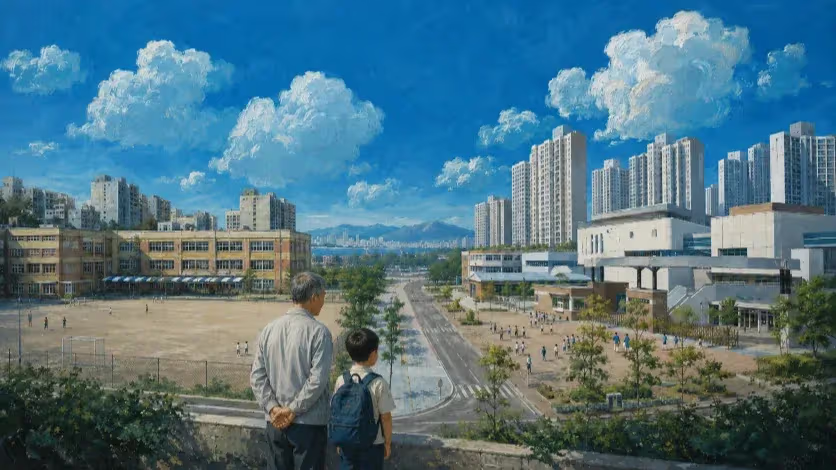
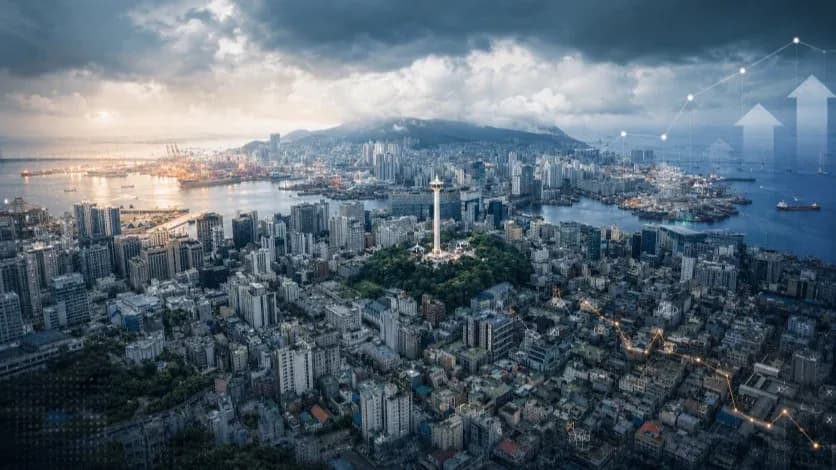
Along the northeastern coast of Busan, several generations of South Korea’s nuclear history are beginning to occupy the same landscape. Kori Unit 1, the country’s first commercial reactor, entered formal decommissioning after regulators approved its dismantling plan in June 2025. Unit 2, commissioned in 1983, has moved in the opposite direction: the Nuclear Safety and Security Commission approved its continued operation last November, authorized its restart in March, and says the reactor has operated at full power since April. KHNP’s real-time system was reporting roughly 673 megawatts from the unit on the morning of Aug. 28. Kori Units 3 and 4 remain under continued-operation review, with regulators planning to bring their licensing proposals before the commission in the second half of this year, while another legacy of the fleet is moving toward formal regulation as well: Korea expects an application for dry storage of spent light-water-reactor fuel at Kori in December. Within one coastal nuclear complex, the country is dismantling the plant that opened its commercial atomic era, extending the life of another generation and beginning to build the institutions required to manage the fuel those reactors leave behind.
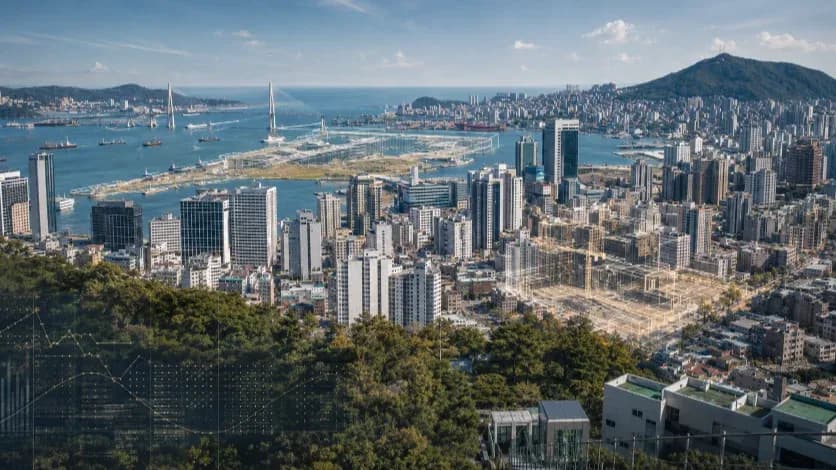
A few kilometres away, Gijang County has secured the planned site for a reactor intended to belong to a different electricity system. Korea Hydro & Nuclear Power selected Gijang in June for the country’s first roughly 0.7-gigawatt small modular reactor project after comparing it with Gyeongju on site suitability, environmental conditions, construction suitability and resident acceptance, each carrying one quarter of the evaluation. Gijang scored 87.11 points against Gyeongju’s 84.56; the county had already built a broad political campaign around the bid, with its council approving the application unanimously and a voluntary promotion committee bringing together the heads of all 191 villages across five eup and myeon. The project would use Korea’s indigenous innovative small modular reactor, or i-SMR, whose standard configuration combines four 170-megawatt modules for 680 megawatts. “Small” therefore describes the unit at the center of the plant more accurately than the plant itself. What Korea is proposing at Gijang is a substantial generating station reorganized around modular capacity, passive safety, extensive automation and the expectation that identical reactors can eventually be manufactured often enough for repetition to replace some of the economies traditionally obtained through size.
The timing gives those design choices significance well beyond nuclear engineering. Global electricity demand is entering a period of unusually rapid expansion as industry electrifies, electric vehicles spread, cooling loads grow and data centres consume increasing amounts of power; the International Energy Agency expects worldwide electricity demand to rise by an average 3.6 percent a year from 2026 through 2030, roughly 50 percent faster than the average growth of the previous decade. Wind, solar and other renewable sources will provide much of the additional low-carbon electricity, supported increasingly by storage and transmission, yet the demand side is also changing in ways that annual generation totals can obscure. Semiconductor plants, industrial electrification and hyperscale computing can place hundreds of megawatts of new load at a single point on the grid, and a data centre may move from planning to operation within two or three years while major transmission projects and conventional generating stations take far longer. Nuclear power is re-entering that system with a purpose wider than the baseload function around which most existing reactors were built: as one potential source of firm low-carbon capacity able to coexist with a much larger renewable fleet while serving customers whose demand may be unusually concentrated, persistent and difficult to postpone.
A Reactor for a Different System
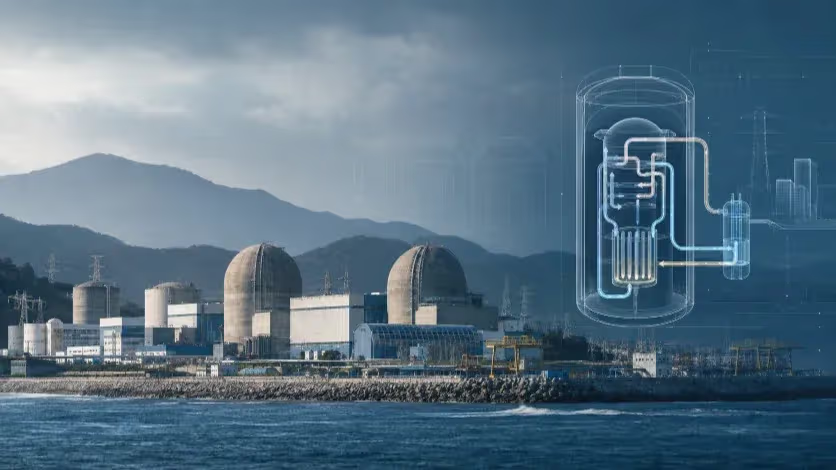
Korea’s i-SMR begins with reactor physics the country already knows well and then rearranges much of the machinery around it. It remains a pressurized-water reactor using uranium dioxide fuel and water under pressure to carry heat from the core, but its integral configuration brings major elements of the primary system into or close around the reactor vessel. Helical steam generators allow heat-transfer equipment to fit inside the compact arrangement; canned-motor coolant pumps eliminate the shaft seals found in conventional pump designs; control-rod drive mechanisms are located within the vessel; normal core control is designed without soluble boron. The development program says that removing the large external primary piping found in conventional pressurized-water reactors eliminates the classic large-break loss-of-coolant accident associated with rupture of those loops. That claim should be read narrowly rather than as the disappearance of coolant-loss accidents altogether: leakage, smaller breaks, pressure-boundary failures and other thermal-hydraulic transients remain part of the safety case. The more consequential feature is the engineering philosophy connecting these decisions. Instead of managing every potential failure by adding another powered system around an increasingly complex plant, the i-SMR repeatedly attempts to remove the component or arrangement that creates a particular accident path and to rely more heavily on physical processes such as natural circulation when heat must be removed.
That simplification shifts part of the burden from machinery to evidence. A passive safety system can reduce dependence on motors, emergency electrical power and immediate operator action, yet its performance still depends on fluid behavior, pressure, heat transfer, coolant inventory and component geometry across the abnormal conditions regulators require a reactor to survive. An integral primary system removes some external piping while creating a compact thermal-hydraulic configuration without the decades of commercial operating experience available for Korea’s existing large reactors; boron-free operation can eliminate supporting equipment while requiring adequate reactivity control through other means; four smaller reactors sharing one plant introduce dependencies through personnel, digital systems, buildings and external hazards that would not appear in an analysis of a single isolated module. The development program has placed unusually ambitious numbers around the resulting design, including a core-damage-frequency target below one event in a billion reactor-years and an emergency-planning zone that could remain within the site boundary. Those remain developer objectives. A smaller emergency-planning footprint becomes a regulatory fact only if accident analysis, source terms and projected offsite consequences support it independently of the label attached to the reactor.
Korea crossed an important threshold in that process this week. The i-SMR consortium submitted its application for standard-design approval at the end of February, and on Aug. 27 the Nuclear Safety and Security Commission received the formal review plan prepared by the Korea Institute of Nuclear Safety. KINS concluded that the application was sufficiently complete for technical safety review to begin after 212 of 225 requests for supplementation had been addressed; the remaining 13 are scheduled to be submitted between September 2026 and June 2027, while major verification-test results are expected through June 2028. Korean law specifies a 24-month review period excluding time used for applicant supplementation and safety experiments, so the regulator now describes the completion date as fluid rather than committing to a simple two-year clock. The commission says its review will concentrate on features particular to the i-SMR, including modular design and passive safety systems, even as Korea develops a wider regulatory framework for reactor concepts that do not fit neatly inside rules written around large conventional plants. The sequence is revealing: Korea is no longer preparing abstractly for a future SMR application; the regulator is examining an actual reactor design while parts of the rulebook required to govern advanced reactors are still being developed.
The control room shows why those regulatory choices will shape the economics of the plant as directly as its safety case. Official i-SMR material envisages three operators supervising multiple modules from a single integrated main control room, supported by autonomous and automatic operation, digital twins and predictive maintenance. A smaller reactor loses part of the economic advantage that comes from spreading fixed operating costs across the output of a very large unit, so adding the second, third and fourth module cannot be allowed to produce a proportionate multiplication of licensed staff, control facilities, maintenance systems and operating overhead if modularity is to deliver the promised savings. Automation therefore belongs inside the commercial architecture of the reactor. Under stable conditions, software can organize plant information, control routine functions and reduce the volume of manual intervention; the demanding cases arrive when different modules occupy different states simultaneously—one in maintenance, another changing output, another returning from an outage and another experiencing an abnormal event—or when an external disturbance affects several reactors together. A highly automated plant does not remove the human operator from nuclear safety. It concentrates human intervention in the situations where automation has reached its limit, requiring regulators to establish whether a smaller crew retains enough awareness and capacity when several machines compete for attention at once.
Load-following extends the same proposition into the electricity market. The i-SMR is promoted as more flexible than the large reactors designed primarily for sustained output, and its developers envisage combinations of electricity generation with hydrogen production, process heat, district heating or desalination. Those capabilities could become valuable in a grid carrying much larger quantities of variable renewable power, but they also expose an economic contradiction that reactor engineering cannot resolve by itself. Nuclear plants commit large amounts of capital upfront and generally reduce their unit electricity cost by operating at high capacity factors; a reactor ordered to lower output whenever solar or wind production is abundant sells fewer megawatt-hours over which to recover that investment. Redirecting energy into industrial heat or hydrogen could preserve utilization, although doing so requires customers, equipment and contracts near enough to absorb it. The i-SMR therefore compresses several linked bets into one design: passive systems must simplify safety without introducing risks the regulator cannot characterize, automation must reduce operating cost without overwhelming the remaining crew, modular construction must reduce project risk, and flexible operation must acquire enough market value to compensate for the different way the reactor would be used. The engineering can create those possibilities. Regulation and electricity markets decide whether they amount to an operating model.
The Economics of Repetition
Large reactors became large because size offers a powerful answer to nuclear power’s fixed costs. Security, licensed personnel, civil structures, safety analysis, quality assurance and regulatory work remain expensive regardless of whether a plant produces a few hundred megawatts or more than a gigawatt, and larger output allows those costs to be spread across more electricity. Korea’s APR1400 embodies that logic at 1,400 megawatts per reactor. The i-SMR accepts a much smaller unit and tries to recover the lost scale somewhere else: standardize the design, manufacture major components repeatedly, move more work into factories, shorten construction through modular assembly and share personnel and plant systems among several reactors. Its development targets call for construction costs below $3,500 per kilowatt and electricity costs below $65 per megawatt-hour, alongside a construction model intended to compress the schedule to roughly two years for a module. Those numbers describe the mature product Korea wants to create rather than the measured performance of a commercial fleet. No commercial i-SMR has yet been constructed, and the difference between a projected nth-of-a-kind cost and the cost of the first plant is where much of the financial difficulty lies.
A first-of-a-kind nuclear project pays for engineering changes, newly qualified components, unfamiliar construction sequences, regulatory uncertainty and suppliers that have not yet learned to produce the same equipment at predictable intervals. Factory manufacturing can move part of that learning away from the site, allowing the same workers, tooling, welding processes and inspection systems to be used repeatedly under controlled conditions; later modules can incorporate experience without forcing each new site to recreate the entire construction process. Yet the factory itself introduces fixed costs. Forging capacity, automated welding, nuclear-quality inspection equipment and specialized production lines make economic sense only when orders arrive often enough to keep them occupied. A modular reactor built once can therefore be commercially worse positioned than a large conventional plant: it sacrifices part of the economy of scale without reaching the economy of repetition intended to replace it. Gijang’s four modules would provide Korea with an invaluable first construction sequence, but serial economics ultimately require domestic follow-on projects, exports or compatible advanced-reactor work sufficient to prevent the production system from dispersing before the learning curve has had time to develop.
Finance magnifies the importance of continuity. Nuclear projects commit capital for years before electricity sales begin, allowing borrowing costs to accumulate through licensing and construction; shortening the schedule can therefore reduce financing expense as well as labor and material costs. Modular deployment also offers a theoretical opportunity to stage investment, bringing early units into operation while later modules remain under construction, though the extent to which a Korean four-module plant can do so will depend on shared systems and licensing conditions that have yet to be demonstrated commercially. The early plants remain the hardest because investors must provide capital before the construction history used to justify mature cost estimates exists. Government support can absorb part of that learning curve, utilities can distribute risk across larger systems, and long-term electricity buyers can reduce uncertainty about future revenue. Without some combination of those mechanisms, the promise that the tenth reactor will be cheaper does little to answer who finances the first several units required to reach it.
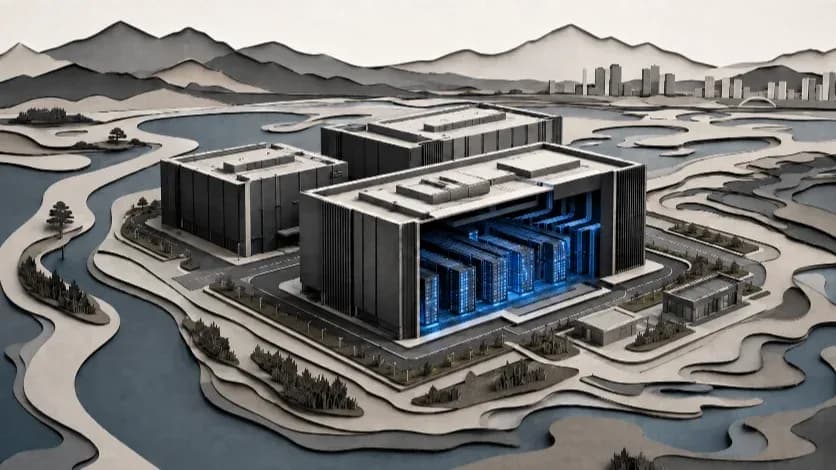
For much of the SMR industry’s development, the customer side of that equation remained weak. Reactor vendors could identify retiring coal plants, industrial campuses, district-heating systems or remote grids as possible uses without producing an order book large enough to justify a manufacturing system before the technology had been commercially demonstrated. The rapid growth of hyperscale computing has changed the scale of prospective demand. The IEA now expects global data-centre electricity consumption to rise from about 485 terawatt-hours in 2025 to roughly 950 terawatt-hours in 2030, close to 3 percent of global electricity use, while electricity consumption in AI-focused facilities grows much faster than the sector overall. Renewables are expected to supply about half of the increase, aided by storage and wider grid investment; natural gas, existing nuclear plants and other dispatchable sources also play major roles, with the first SMRs entering the agency’s outlook around 2030 rather than serving the most immediate wave of demand. AI therefore does not create a straightforward case for replacing renewables with nuclear power. It creates large loads quickly enough to increase the value of every resource capable of adding reliable capacity without deepening long-term dependence on carbon-intensive generation.
The significance for advanced nuclear developers lies in the appearance of customers whose electricity requirements increasingly resemble power projects in their own right. Google’s arrangement with Kairos Power and the Tennessee Valley Authority places a first 50 megawatts from the planned Hermes 2 advanced reactor on TVA’s system beginning in 2030, within a broader pathway for up to 500 megawatts of Kairos deployments; TVA purchases the electricity while Google procures the associated clean-energy attributes for data centres operating on the utility’s grid. Meta has moved further toward the financing role traditionally occupied by utilities and governments, announcing agreements with Vistra, Oklo and TerraPower that, together with an earlier nuclear arrangement, could support as much as 6.6 gigawatts of existing and prospective nuclear capacity by 2035. Meta explicitly describes its funding as giving advanced-reactor developers greater business certainty and an improved ability to raise capital. Neither arrangement proves that new nuclear generation will be cheaper than competing combinations of renewable power, storage, gas, geothermal generation or grid investment, and most advanced reactors will arrive too late to serve data-centre projects being built in the next few years. Their importance lies elsewhere: technology companies have become large enough electricity buyers, with strong enough balance sheets, to support generating assets years before the first megawatt reaches the grid. AI has begun to make demand bankable before it has made SMR electricity demonstrably cheap.
Europe’s policy shift has widened the same commercial space from the government side. The European Commission already described nuclear power as a key source of low-carbon electricity in its 2011 Energy Roadmap, so the current change cannot be explained as a recent discovery about reactor emissions. What expanded during the following decade was the range of economic and strategic functions assigned to the technology. The EU’s Complementary Climate Delegated Act brought specified nuclear activities into the sustainable-finance taxonomy under strict conditions beginning in January 2023; the 2024 Net-Zero Industry Act listed nuclear fission and nuclear-fuel-cycle technologies among the technologies covered by Europe’s net-zero manufacturing framework; and the Commission’s dedicated SMR strategy, adopted in March 2026, aims to bring initial European projects online in the early 2030s while identifying data centres, industrial heat and hydrogen among the potential markets. Preliminary Commission estimates place possible EU SMR capacity between 17 and 53 gigawatts by 2050. Europe remains politically divided over nuclear power, but the policy argument around it has broadened from whether reactors belong in a low-carbon generation mix to whether nuclear manufacturing, firm power and domestic supply have value for industrial competitiveness and energy security.
That distinction matters for Korea because an i-SMR will enter electricity systems in which solar and wind may often provide cheaper marginal energy, batteries increasingly manage short-duration fluctuations and transmission can move renewable output between regions. A new reactor cannot justify itself by assuming that renewable deployment will stop. It has to compete for the parts of the system that remain valuable after renewable generation, storage and grids have expanded: dependable capacity, long-duration low-carbon output, concentrated industrial power, heat or other energy services for customers unwilling to rely indefinitely on fossil-fuel backup. A standard four-module i-SMR would produce 680 megawatts, placing it in roughly the same scale range as some of the computing and industrial loads now motivating power procurement abroad. No public evidence establishes a dedicated data-centre customer for the planned Gijang plant, however, and Korea has yet to define a comparable anchor offtaker. The country therefore possesses a reactor design entering a market whose appetite for firm electricity is becoming clearer before the commercial role of its first plant has been fully settled.
Korea’s Industrial Route
Korea begins that problem with capabilities many advanced-reactor developers are still trying to assemble. The country operates a mature pressurized-water fleet, manufactures nuclear fuel and heavy components, and has already carried a standardized domestic large-reactor design into a completed overseas fleet. The four APR1400 units at Barakah in the United Arab Emirates entered commercial operation between April 2021 and September 2024, giving Korean companies experience that extends from design and manufacturing into construction, commissioning, maintenance and operating support for a foreign customer. Such experience substantially reduces the industrial distance between a reactor drawing and a commercial plant. SMRs nevertheless demand a different form of competitiveness. Barakah was a megaproject organized around four very large units at one site; modular economics require factories and suppliers to preserve learning across many smaller units and, ideally, across several sites without allowing the intervals between projects to dismantle the production system created for the previous one.
Doosan Enerbility has already begun positioning its manufacturing base for that market through reactor designs developed outside Korea. In December 2025, the company signed a reservation agreement under which X-energy would secure Doosan forgings for 16 Xe-100 high-temperature gas reactors intended for projects associated with Dow and Energy Northwest in the United States. The distinction between a reservation agreement and a completed reactor order matters, but the industrial step is concrete: X-energy is reserving long-lead Korean production capacity before the full set of reactors exists. A broader collaboration announced by X-energy, Amazon, KHNP and Doosan in August 2025 aims to support more than five gigawatts of Xe-100 deployment in the United States by 2039, with the parties saying they intend to explore mobilization of as much as $50 billion in public and private investment for reactor projects and the associated supply chain. The figures remain ambitions tied to projects that still require licensing, financing and construction, yet the structure illustrates how the emerging advanced-nuclear market differs from the nationally integrated export model that produced Barakah: an American technology company can help provide demand and capital, an American developer controls the reactor design, and Korean companies participate through manufacturing and operating expertise.
Korea is consequently pursuing two industrial strategies at once. One seeks to establish the i-SMR as a Korean reactor product from which domestic institutions can capture design, licensing, manufacturing, operating and eventually export value. The other places Korean manufacturers and utilities inside foreign advanced-reactor programs whose success does not depend on the Korean design prevailing in the global market. The strategies can reinforce each other if investment in forgings, advanced welding, quality assurance, digital manufacturing and nuclear-qualified suppliers enlarges the industrial base available to the i-SMR. They can also pull in different directions. A factory working across several reactor technologies spreads commercial risk while sacrificing some of the repetition that produces the deepest learning curve; different coolants, materials, dimensions, fuel systems and regulatory codes can turn a supposedly serial industry into another collection of specialized projects. Overseas buyers may require local manufacturing, while foreign regulators can demand modifications that weaken design standardization. Korea’s advantage therefore lies less in possessing a large nuclear supply chain than in determining which parts of that supply chain can be made repeatable enough to remain economically valuable across competing reactor designs.
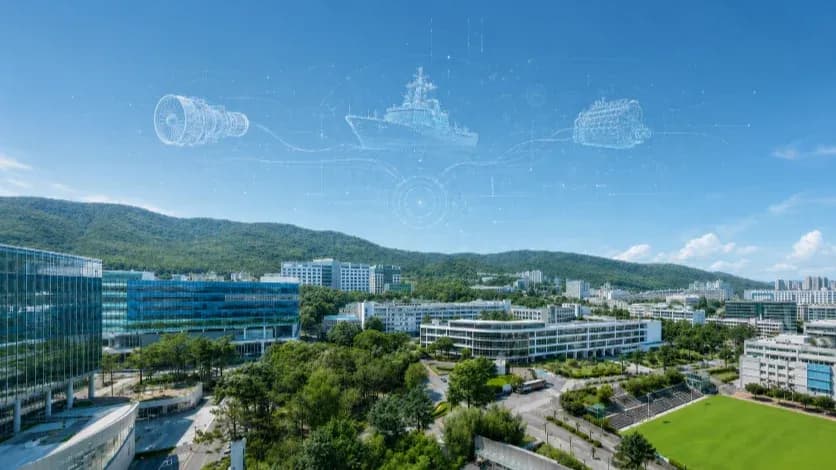
Southeastern Korea gives that industrial strategy a particularly dense geography. Gijang sits within the wider Busan-Ulsan-Changwon manufacturing corridor, close to decades of nuclear operations at Kori and Saeul and within a region built around petrochemicals, shipbuilding, machinery, metals and other electricity-intensive industries. Changwon contains Doosan’s major nuclear manufacturing operations; the southeastern reactor fleet has supported generations of engineers, maintenance companies and specialized suppliers; Busan is trying to build an industrial strategy around next-generation nuclear technologies rather than remain merely the metropolitan region next to Kori. The setting gives the first i-SMR access to infrastructure and expertise that an inexperienced greenfield site would have to create, while the surrounding industrial economy provides a plausible context for the broader uses developers envision for modular nuclear power. Gijang’s incoming county leadership has already linked the project politically to an ambition to attract an AI data centre, echoing the power-demand story behind advanced-nuclear agreements in the United States. No announced contract connects such a facility to the i-SMR, and the sequence is actually reversed: American hyperscalers are increasingly beginning with known demand and helping generation projects form around it, whereas Gijang is beginning with a proposed source of firm power and hoping that the asset strengthens its case for future industrial demand.
The difference gives the first Korean plant an industrial function beyond the electricity it eventually produces. If modularity is to become an export model rather than a national demonstration, Gijang has to generate knowledge that survives the site—qualified components, construction sequences, regulatory precedents, operating procedures, maintenance methods and supplier learning that lower uncertainty for whatever follows. A first project can sensibly begin in one of the places best prepared to absorb that risk. Yet the very qualities that make Gijang attractive complicate what success there would prove. Later customers may want reactors beside retiring coal plants, industrial estates or computing campuses without an established nuclear workforce, existing host-community institutions or decades of transmission development. Korea can use inherited advantages to reduce uncertainty around the first deployment; the economics of a serial reactor eventually require the design to become less dependent on those advantages.
What Gijang Inherits
The inheritance around Kori extends far beyond transmission lines and nuclear-qualified labor. Almost half a century of reactor operation has also created a social infrastructure of statutory support areas, emergency-planning zones, local government expertise, community organizations and expectations about what residents should receive in return for hosting nuclear facilities. Those institutions are less visible than a reactor vessel and often harder to standardize. Korea’s power-plant support system begins with a concept of geographical proximity, while emergency planning defines another territory according to radiological consequences and non-statutory cooperation agreements can establish still another community around negotiation and benefit. Once a radius is translated into administrative boundaries, representation and money, geography ceases to function as a simple physical measurement; it becomes an institutional decision about who belongs inside a nuclear relationship.
The continuing dispute around Kori Units 2, 3 and 4 shows how contested that relationship can become even in one of Korea’s most experienced host regions. Local reporting places the non-statutory cooperation package associated with continued operation at roughly 400 billion won, and residents from communities outside the five-kilometre radius have protested that they were excluded from the negotiating structure and eventual distribution. Representatives involved in the agreement have said participation was available more widely and that the protesting communities did not enter the process when discussions were taking place. By late August, the disagreement had grown sufficiently serious for Gijang County Mayor Woo Sung-bin to ask KHNP’s new president to take a more active role, saying disputes over consultation procedures and allocation criteria were deepening division among residents. At the same meeting, the county raised dry storage of spent fuel and the new i-SMR, calling for substantive consultation over storage and for KHNP to explain the safety of the modular reactor directly to residents before further cooperation. Three issues that appear separate at the level of national energy policy—operating old reactors longer, managing the fuel accumulated during those decades and building a new reactor technology—had converged inside the same local relationship between utility, government and community.
The history behind those negotiations also shows how one nuclear bargain can become part of the institutional memory of another. When Kori Unit 1 received its first life extension in 2007, KHNP committed roughly 131 billion won to nine regional support projects. During negotiations over the continued operation of Wolsong Unit 1 years later, KHNP used the Kori amount as a reference point while proposing a lower figure that reflected Wolsong’s shorter expected operating period; residents demanded considerably more before the final Wolsong settlement returned to 131 billion won. The episode did not establish a legal price for an additional reactor-year, and the bargaining itself demonstrates that the figure was never an automatic tariff. Its significance lies in the way a negotiated settlement around one reactor migrated into the expectations surrounding another. Nuclear regulation can specify technical limits with extraordinary precision while the social price of keeping a reactor in service develops through precedent, institutional memory and bargaining.
Gijang’s campaign for the i-SMR has already drawn a much wider political map than the one visible in the current continued-operation dispute. The county mobilized five eup and myeon and 191 village heads around attracting the project, and KHNP’s site-selection process assigned resident acceptance the same formal weight as site suitability, environmental conditions or construction suitability considered individually. The i-SMR was promoted as an economic opportunity for Gijang as a whole, with local government linking it to jobs, new industry and wider development, while negotiations around the existing Kori reactors have remained focused much more closely on communities living near the plants. The boundaries do not have to be identical because they answer different institutional questions. A county deciding whether to attract a new investment, a village negotiating over continued operation, a statutory support scheme and an emergency planner are not necessarily defining the same community. Their coexistence nevertheless exposes the weakness in treating “the host community” as though one circle on a map could settle who should participate in every nuclear decision.
The i-SMR could make those distinctions sharper because its technical and economic geographies point in different directions. Developers want a safety case strong enough to support a much smaller emergency-planning footprint than the one associated with conventional large reactors, potentially drawing one form of nuclear-risk geography closer to the site. Gijang and the wider Korean industrial strategy are simultaneously expanding the geography over which the reactor’s economic value is imagined, linking it to manufacturing, research, industrial customers and potentially AI infrastructure throughout a much larger region. A smaller projected accident footprint would provide no automatic answer about who should receive economic support, whose consent should carry political weight or how broadly the gains from an industrial cluster should be distributed. Radiation analysis can establish projected consequences; it cannot define the political community entitled to bargain over them. Korea’s existing nuclear institutions evolved together over decades, allowing proximity, emergency planning and local compensation to overlap often enough that their different purposes were easy to blur. A modular reactor whose developers seek a fundamentally different emergency-planning assumption may force those distinctions into the open.
Gijang is therefore both an unusually favorable first site and an unusually complicated place from which to generalize. Existing transmission, established nuclear land, nearby industry and an experienced host population remove uncertainties that future SMR customers may have to confront from the beginning. The county’s successful bid shows that substantial local support for a new reactor can coexist with unresolved arguments over the terms of hosting the old ones. A commercial i-SMR built there would establish that Korea could move the technology from design review into operation under favorable deployment conditions; later projects would have to show that the same reactor remains attractive when the site has less nuclear history, the customer is more directly tied to a particular industrial load, or the surrounding institutions have never negotiated with a nuclear operator before. First-of-a-kind development has every reason to remove avoidable variables. Serial economics eventually require those favorable variables to stop being prerequisites.
Along the Kori coast, the transition is visible without reducing it to a contest between old and new reactors. Kori Unit 1 is entering dismantling after helping establish Korea’s commercial nuclear industry. Unit 2 is again producing electricity after crossing its original operating horizon. Units 3 and 4 await decisions over whether they can do the same. Spent fuel accumulated through those decades is pushing Korea toward new storage arrangements. Nearby, regulators have begun the safety review of a modular reactor whose integral primary system, passive cooling, digital operation and factory-oriented production were conceived for an electricity system with more renewable generation, more concentrated industrial loads and a new class of corporate electricity buyers that barely existed when Kori was built.
For the i-SMR to become commercially important, the simplification promised inside the reactor will have to produce measurable consequences outside it. Passive systems must support a safety case strong enough for regulators to recognize where conventional assumptions no longer fit; automation must allow several modules to share operating resources without making rare abnormal events harder for human crews to manage; modular construction must emerge from an actual Korean project with a schedule and cost credible enough to persuade later customers to order the same reactor; manufacturers need enough continuity for those orders to become a production curve rather than another sequence of bespoke nuclear projects. The electricity market imposes an equally severe discipline. Wind, solar, batteries, transmission, gas, geothermal power and demand flexibility will continue improving during the years in which the first i-SMR is licensed and built, forcing nuclear capacity to demonstrate value against the system that exists when it arrives rather than the one imagined when the design program began.
Korea enters that competition with unusual advantages: an operating fleet, a completed large-reactor export, heavy manufacturing capacity, experienced regulators and a first site located inside one of the country’s deepest concentrations of nuclear infrastructure and institutional knowledge. Those advantages make the first reactor easier to imagine. They do not create the repetition on which the SMR business ultimately depends. Their value will be determined by what follows Gijang—whether one licensing review becomes a durable regulatory framework, whether factories receive another order before hard-won manufacturing experience dissipates, whether electricity buyers emerge for the capacity being offered and whether a host-community model created around conventional reactors can evolve when the technical geography of the new plant begins to change.
Kori Unit 1 was built for a Korea that urgently needed large centralized generating capacity and possessed little nuclear industry of its own. Nearly half a century later, the country is approaching almost the inverse problem. Korea already knows how to build and operate nuclear reactors. The electricity system around them is becoming more renewable, more digitally managed, more industrially electrified and, in selected locations, vastly more demanding.
The future of the i-SMR will depend on whether Korea can make those two histories meet at Gijang—and then make what works there repeatable somewhere else.
Editorial Context
"Independent journalism relies on radical transparency. View our full log of editorial notes, corrections, and project dispatches in the Newsroom Transparency Log."
Reader Signal
Community readWhat did this report leave you with?
Choose the signal that best reflects your reading. Select it again to remove it.
Anonymous One response per article
No response selected
Join the discussion
A more thoughtful conversation, anchored to the story
Atlantic-style discussion for this article. One-level replies, editor prompts, and moderation-first participation are now powered directly by Prisma.
Discussion Status
Open
Please sign in to join the discussion.
The Weekly Breeze
Independent reporting and analysis on Busan,
Korea, and the broader regional economy.