Busan to Host IHO Centre as Maritime Standards Go Digital
Busan has secured final approval to host an International Hydrographic Organization infrastructure centre, giving the city a role in the systems behind the global transition to new digital maritime standards.

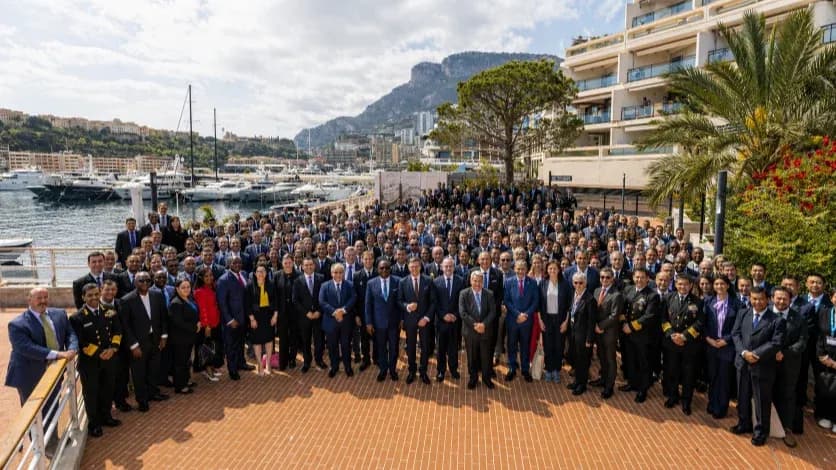
BUSAN — Busan has secured final approval to host an International Hydrographic Organization infrastructure centre, placing South Korea’s main port city inside the implementation architecture of a new global maritime data regime. The IHO Secretariat will remain in Monaco, but the new centre in Busan will support key parts of the S-100 framework, the digital standard reshaping how hydrographic and navigational information is managed and delivered.
The decision was finalized at the fourth IHO Assembly in Monaco in April, with Korean government releases identifying Busan’s BIFC2 in Munhyeon-dong as the site of the new facility. The move gives Busan not the headquarters of the IHO, but a defined role in the technical systems behind the transition from legacy electronic charting toward a broader, more integrated digital maritime information structure.
The IHO coordinates the standards used to survey, chart and describe the world’s seas and navigable waters. Its work underpins the nautical charts and hydrographic data that allow ships to move safely across jurisdictions using common technical rules. That institutional role has taken on greater weight as maritime navigation shifts toward systems capable of integrating a wider range of digital information beyond conventional chart data alone.
That transition is now moving from development into operation. The IHO said in March that the S-100 framework had become operational after Phase 1 product specifications entered into force in January 2026. The framework is designed to support a more flexible digital architecture for marine information, allowing charting and navigation systems to incorporate additional layers such as currents, tides, warnings and other data that older formats handled less effectively.
In that context, the Busan centre carries more than symbolic significance. Korean government material and IHO-related documents describe it as supporting the S-100 standards framework, lifecycle management of S-100-based product specifications, the IHO geospatial information registry, parts of the S-100 security scheme, secure distribution of S-100 data, and technical infrastructure related to navigational systems type approval. The centre is being built not as a ceremonial annex, but as part of the operating layer of an international standards system entering practical use.
The Korean government presented the Assembly outcome as part of a broader advance in maritime standards diplomacy. Alongside the infrastructure centre approval, Seoul highlighted the adoption of the S-130 dataset on global sea areas and South Korea’s fourth consecutive seat on the IHO Council. Together, those outcomes point to a deliberate effort to expand Korean influence in the technical and institutional frameworks that govern digital maritime information.
The strongest significance of the Busan centre at this stage is strategic and institutional rather than immediately economic. Public documents support the case that Busan has secured a valuable place in an emerging standards ecosystem. They do not yet support inflated claims of a large short-term economic windfall. Busan’s own release says the city spent about KRW 6 billion to acquire part of BIFC2 and plans roughly KRW 700 million more for office construction, while the Ministry of Oceans and Fisheries budget material includes KRW 2.5 billion for operation of the IHO Infrastructure Centre in Busan. Planning material points to a relatively small initial workforce, with room for gradual expansion over time.
The likely value for Busan lies in longer-term positioning. A city that already defines itself through shipping, ports and marine industry has now secured a foothold in the governance infrastructure of digital hydrography. Over time, that could strengthen linkages to electronic charting, navigation equipment, marine data services, standards-related testing, technical training and other services tied to the modernization of maritime systems. The promise is credible, but it remains prospective rather than fully demonstrated.
The local dimension of the decision is less settled than the official announcements suggest. Busan city council records show that the choice of BIFC drew scrutiny, with questions raised over why the centre was not placed in the city’s marine cluster around Dongsam Innovation District. City officials said eight candidate sites had been reviewed and that the final choice followed inspections involving the oceans ministry and the IHO. That leaves an unresolved question of urban strategy rather than diplomatic status: whether the city chose administrative convenience, international accessibility or a broader redevelopment logic over closer integration with its existing marine institutions.
The adoption of S-130 added a second layer to the Korean case at the Assembly. Official Korean material described it as a new digital dataset that divides global sea areas using unique numerical identifiers instead of place names. The IHO registry defines it more precisely as the product specification for polygonal demarcations of global sea areas. The technical wording matters because it reflects the same underlying shift visible in the Busan decision itself: marine space is being made more machine-readable, more standardized and more interoperable for digital systems.
The central fact remains clear. Busan has not become the home of the IHO. Monaco remains the site of the Secretariat. What Busan has secured is a place in the implementation infrastructure of a maritime standards transition that is already underway. In practical terms, that may prove more consequential than a nominal institutional relocation would have been. As the S-100 regime moves from framework to operation, the cities and institutions embedded in its supporting architecture will carry growing weight. Busan now stands among them.
Continue this reporting
Reporting on the same issue
Related coverage selected from the article's desk, topics and newsroom relationships.
 NewsSep 20, 2026
What It Takes for U.S. Navy Repair Work to Become a Busan Industry
HJ Shipbuilding has brought U.S. Navy maintenance work to Yeongdo. Whether it...
 NewsSep 17, 2026
Busan’s Finished Homes, Unfinished Projects
Busan’s unsold homes sit in one monthly total, but they belong to very differ...
 NewsSep 16, 2026
Busan’s Young-Adult Migration Turns Sharply at 25–29
Busan can still draw young adults into the city, but keeping them becomes far...
More from the author
More from this byline
Stay with the same line of reporting through more work from this byline.
Editorial Record
Corrections, sourcing notes and newsroom disclosures remain part of the published record. View Newsroom Notes →
Reader Signal
Community readWhat did this report leave you with?
Choose the signal that best reflects your reading. Select it again to remove it.
One response per article
No response selected
A moderated conversation about the reporting.
One-level replies and newsroom moderation keep the conversation anchored to this article.
Discussion Status
Open
Please sign in to join the discussion.
Newsletter
Weekly reporting and context from Busan and Korea.