Busan Sees a Near Doubling of Employed Seniors Over the Past Decade
The number of employed individuals aged 60 and older in Busan has nearly doubled in the past 10 years, reflecting a nationwide trend in South Korea. According to data from Statistics Korea's National Statistics Portal (KOSIS), there were 396,000 people aged 60 and over employed in Busan last month, marking a significant increase compared to February 2013 (205,000) and February 2003 (106,000). Several factors contribute to this growing trend. Firstly, the aging population in South Korea has been


The number of employed individuals aged 60 and older in Busan has nearly doubled in the past 10 years, reflecting a nationwide trend in South Korea. According to data from Statistics Korea's National Statistics Portal (KOSIS), there were 396,000 people aged 60 and over employed in Busan last month, marking a significant increase compared to February 2013 (205,000) and February 2003 (106,000).
Several factors contribute to this growing trend. Firstly, the aging population in South Korea has been steadily increasing, as baby boomers (born between 1955 and 1963) enter their senior years. Additionally, many seniors are seeking ways to supplement their income due to rising prices and the high cost of living.
A 2019 study published in the Journal of Gerontological Social Work highlighted the challenges faced by older adults in the Korean labor market. It revealed that seniors often face age discrimination and limited job opportunities, leading to a higher prevalence of low-wage and unstable employment. Furthermore, the study emphasized the importance of social policies and programs that support the economic well-being of older adults.
Nationally, 5.72 million people aged 60 and older were employed in February, a 41,000 increase compared to the previous year. This number has more than doubled since February 2013 (2.73 million).
As the number of employed seniors continues to grow, it is crucial for policymakers and businesses to address the unique needs and challenges faced by this demographic. This includes implementing age-friendly workplace policies, offering skill development and training programs, and ensuring access to adequate healthcare and social services. By doing so, South Korea can create a more inclusive and supportive environment for its aging workforce.
Continue this reporting
Reporting on the same issue
Related coverage selected from the article's desk, topics and newsroom relationships.
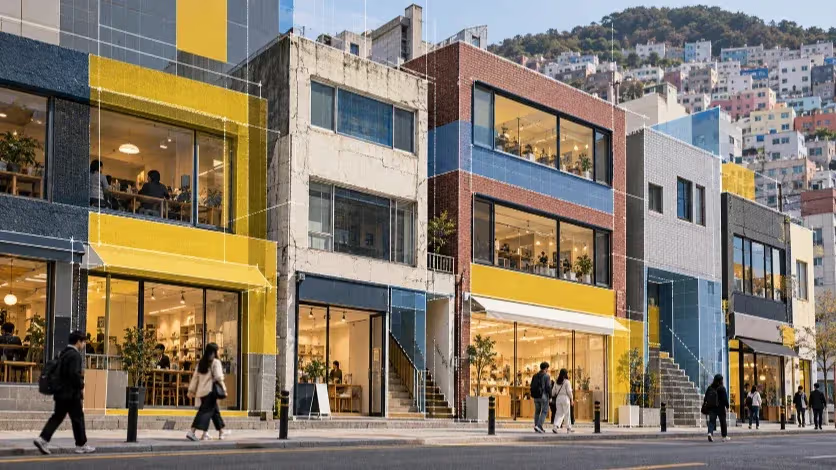 NewsSep 28, 2026
Why Some Commercial Space in Busan Is Hard to Reuse
Two empty commercial spaces exposed to the same broader economy can have very...
 NewsSep 20, 2026
What It Takes for U.S. Navy Repair Work to Become a Busan Industry
HJ Shipbuilding has brought U.S. Navy maintenance work to Yeongdo. Whether it...
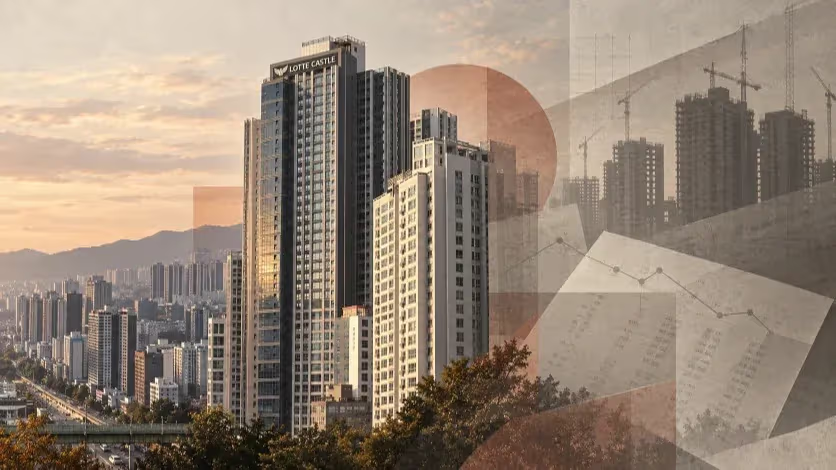 NewsSep 17, 2026
Busan’s Finished Homes, Unfinished Projects
Busan’s unsold homes sit in one monthly total, but they belong to very differ...
More from the author
More from this byline
Stay with the same line of reporting through more work from this byline.
 NewsSep 18, 2026
The Other AI Race Is for the Freedom to Change Course
 NewsSep 5, 2026
How a Political Appointment Becomes a Judgment of Character
Editorial Record
Corrections, sourcing notes and newsroom disclosures remain part of the published record. View Newsroom Notes →
Reader Signal
Community readWhat did this report leave you with?
Choose the signal that best reflects your reading. Select it again to remove it.
One response per article
No response selected
A moderated conversation about the reporting.
One-level replies and newsroom moderation keep the conversation anchored to this article.
Discussion Status
Open
Please sign in to join the discussion.
Newsletter
Weekly reporting and context from Busan and Korea.