At Igidae, Busan’s Coastline Becomes a Planning Test
Busan has spent years framing Igidae as an ecological and cultural coastline. A private high-rise approval at its entrance now tests whether the city can distinguish a developable parcel from the public landscape that gives it value.

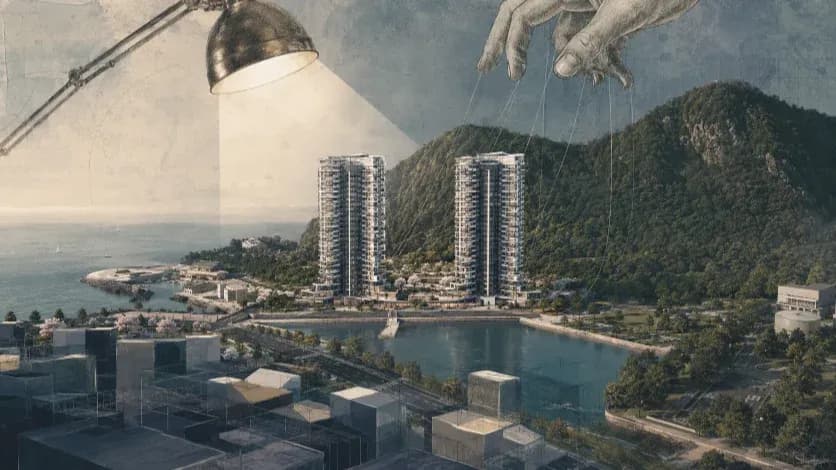
A 25-story apartment approval near Igidae Park raises a sharper question than building height: how far Busan will allow public coastal value to be converted into private residential use.
At the entrance to Igidae Park in Busan’s Nam-gu district, a private apartment project has cleared the administrative barrier that critics had hoped would hold. The approved plan is smaller than earlier versions, yet it remains a high-rise residential project: 25 stories, two towers and 288 homes near one of the city’s most politically sensitive coastal landscapes. Local reports differ slightly on the exact project-site area, with Busan Ilbo citing 23,158 square meters and News1 citing 23,857 square meters, but they agree on the basic scale of the approval: two 25-story residential towers at the edge of Igidae.
Building height is no longer the strongest way to read the dispute. Nam-gu Office can argue that the parcel is privately held and that the project moved through review. IS Dongseo, the developer, can point to a revised plan below earlier proposals. Civic groups can press the timing, the bundled approval process and the impact on landscape. The larger issue sits behind those arguments. Busan has spent public money and political language turning Igidae into a civic coastal commitment. A district-level approval has now opened the way for a private residential use at its threshold.
The Igidae approval tests a distinction that planning systems often leave unclear. A parcel can be legally developable and still draw value from public landscape, public access and public investment around it. The apartment site is not being built inside the publicly purchased core of Igidae Park. That fact matters. Yet the gateway to a publicly financed coastal landscape carries obligations that ordinary residential land does not. Busan’s planning system now has to show whether it can recognize that difference before construction begins.
An approval at the park’s threshold
Nam-gu Office approved IS Dongseo’s housing construction project plan in June, according to local reporting. Busan Ilbo reported that the district approved the plan on June 18, with construction expected in October 2026 and completion targeted for 2029. News1, carried by Financial News, reported that the district approved and publicly noticed the project for the area around 973 Yongho-dong, allowing two 25-story buildings with 288 homes.
The latest plan followed earlier, larger versions. News1 reported that the project had first been pursued as a 31-story, three-building plan before local opposition over reckless development and landscape damage led to revisions through Busan’s review process. Busan Ilbo reported that an earlier 28-story, two-building plan with 308 homes was reduced by three floors per tower after review in four fields: landscape, architecture, traffic and development-activity permission. The reported height fell from about 98 meters to about 89 meters.
The reduction did not settle the density question. Busan Ilbo reported that the approved floor-area ratio remained at 249.54 percent, almost the same 249-percent range as the earlier plan. A previous Busan Ilbo report on the 2025 resubmission made the same point in a sharper form: the project’s floor-area ratio had barely changed even after the number of buildings was reduced, because more homes were placed inside each building.
That detail changes the meaning of compromise. Lowering a tower by three floors can soften a skyline. Preserving almost the same floor-area ratio keeps much of the development mass intact. A planning dispute around Igidae cannot be resolved by counting stories alone. The relevant questions include how much building volume remains, how the towers sit in the approach to the park, how traffic enters the site, what kind of public space is actually provided, and whether the approval process considered the parcel as part of a larger coastal entrance rather than a stand-alone residential lot.
Public contribution also needs closer examination. News1 reported that the revised plan includes about 600 pyeong of public open space next to the apartment site, a widening of the Igidae access road from 10 meters to 20 meters, and a reduction in the number of homes to 288. Busan Ilbo previously raised doubts about whether the proposed public open space would function mainly for future residents and whether road widening would primarily serve construction vehicles and apartment traffic rather than broader civic access.
The legal status of the site gives the district and developer a basic defense. The apartment is not a direct project inside the protected parkland that Busan purchased for conservation and art-park planning. It is an adjacent private development parcel near the entrance. Strong reporting must keep that boundary clear. The public issue begins after that boundary is acknowledged: the value of the parcel is inseparable from the coastline, park access, sea views and public planning work around it.
Igidae as a public planning commitment
Igidae’s significance does not rest on scenery alone. Busan Metropolitan City has already treated the area as a formal public project. In an English-language city release on Igidae Art Park, Busan said the coastal area was removed from military reservations and returned to citizens after the government opened military bases along the coastline in 1997. The city also linked Igidae’s public role to the Igidae Coastal Walkway Development Project in 2005 and its recognition as a National Geopark in 2013.
Public investment then turned the park from an inherited landscape into a planning obligation. Busan said it invested 73.7 billion won over five years, from 2019 to June 2023, for the repurposing of 712,000 square meters of private land inside Igidae Park after the urban-park sunset issue. The city described the completion of that private-land compensation as the basis for using Igidae’s 1.25 million square meters of natural landscape and a 4.7-kilometer coastal walkway from Oryukdo Islets to Dongsaengmal Trail to create a culture and art park while preserving the area’s ecological environment.
Those official statements matter more than tourism descriptions. Busan has not merely advertised Igidae as a place to visit. The city has spent money, invoked conservation, linked the area to art-park planning and described the coastline as a landscape to be preserved while used for public life. A residential tower approval at the entrance therefore cannot be treated as an ordinary edge-of-neighborhood decision. It sits beside a public promise built through access, compensation, ecological language and cultural planning.
Geology gives that promise a separate evidentiary base. Busan National Geopark’s official English page identifies the Igidae and Oryukdo areas as formations made of volcanic rocks and tuffaceous sedimentary rocks from lava, volcanic ash and pyroclastic flow during late Cretaceous volcanic activity about 80 million years ago. The official description also notes volcanic breccias, tuffaceous sedimentary rock and dikes in the Igidae coast and Oryukdo quay area.
Geological value does not make every adjacent private parcel untouchable. It does, however, change the burden of explanation. A city that has formally identified, purchased, planned and promoted a coastal landscape as ecological and cultural infrastructure should be able to explain why its entrance is suitable for high-rise private housing. Without that explanation, the apartment approval appears to treat the public value around the parcel as a market advantage while leaving the public consequences to be addressed after the fact.
The divide between parcel and landscape is visible in daily urban experience. A resident walking or driving toward Igidae does not encounter cadastral boundaries first. The approach is read as one sequence: road, slope, sea, park entrance, coastal edge, public trail and skyline. Planning law may divide that sequence into separate ownerships and review tracks. Urban life joins them before the first step onto the park path.
The Yongho Bay precedent
IS Dongseo did not arrive at Igidae without a Busan waterfront history. The company’s official English project list identifies “W Mixed-use apartment building, Yongho-bay, Busan” as a representative residential-complex project. A separate company news item says the same W project won an excellence prize in the high-rise residential building division of the 22nd Livable Apartment Contest by Maeil Business News in 2018.
Yongho Bay W is the sharper precedent for Igidae than the company’s broader Busan portfolio. Yonhap News Agency reported in 2019 that W was built on 42,052 square meters of land created when Busan reclaimed public waters in Yongho Bay in 2009. IS Dongseo acquired the land in July 2010 and completed a 69-story, four-tower, 1,488-unit mixed-use residential complex in March 2018. Yonhap also reported that apartment construction had originally been unavailable on the site, then became possible after Busan changed the district-unit plan in April 2012.
The W project carried a planning controversy that still matters for the Igidae debate. Yonhap reported that the district-unit plan change and earlier land sale generated allegations of special treatment, and that the Audit and Inspection Board concluded the city had sold the site to IS Dongseo for 23.9 billion won below market price, recommending recovery of that amount. The issue was later settled through a 12 billion won arbitration decision and IS Dongseo’s construction and donation of the Bunpo Culture and Sports Center, according to the same report.
Development-charge litigation followed the project’s completion. Financial News, carrying News1, reported that Nam-gu imposed a 3.5 billion won development charge on IS Dongseo after W was completed, but Busan District Court ruled in favor of the company and canceled the charge. The court found that the relevant development-gain recovery law did not apply because the Yongho Bay landfill had already been created by Busan before IS Dongseo acquired it and the housing project itself did not require separate land development work.
W should not be copied onto Igidae as if the two cases were legally identical. Yongho Bay involved reclaimed waterfront land, a district-unit plan change and a completed 69-story mixed-use complex. Igidae involves a private parcel at a park entrance, a 25-story apartment approval and a dispute over the adequacy of review and deemed approvals. Different legal routes led to different projects.
The shared logic lies in how coastal value becomes residential value. In Yongho Bay, reclaimed land, planning revision, bridge-and-sea views, and high-rise design combined into one of Busan’s most visible private residential landmarks. At Igidae, the value comes from the proximity to a public coastal park, the approach to a national geopark landscape, and a city project that has already made the surrounding area more legible as public heritage. The developer does not have to create the sea, the cliffs, the trail, the public memory or the city’s art-park promise. It has to secure the right to build next to them.
That is the economic grammar connecting W and Igidae. The controversy is less about one developer’s appetite for sea views than about a planning system that has repeatedly allowed public coastal value to be capitalized as private residential value. A fair article should avoid caricature. IS Dongseo is not the only actor in the story. Nam-gu Office approved the project. Busan Metropolitan City built the larger public frame. The gap between those two actions is where the public question sits.
Where approval becomes compression
The Igidae dispute also turns on an administrative mechanism that sounds technical until it changes a coastline. Under Korea’s housing approval system, a housing construction project plan can incorporate other permits and approvals after consultation with relevant agencies. The tool is designed to compress administration, preventing a single project from being trapped in disconnected review queues.
Civic groups argue that the Igidae approval did more than permit two apartment towers. They have raised concerns that planning and development-related decisions were effectively bundled into the housing project approval path. Local reporting has cited criticism over deemed approvals connected to district-unit planning, building permission, development activity, farmland conversion and forestland conversion. Nam-gu Office has said the application went through required reviews and revisions and that approval followed the legal processing period.
The key point is not that deemed approval is an invented or automatically illegal procedure. Korean law uses deemed approval as an administrative device. The harder issue is what kind of public scrutiny remains inside that device when the site is a sensitive coastal gateway.
Government legal interpretations show why that distinction matters. In a 2021 interpretation, the Ministry of Government Legislation concluded that when development permission exceeding a certain scale is deemed through a housing construction project approval, the project still has to go through the required review for development activity beyond the size threshold. The interpretation’s practical meaning is clear: deemed approval does not always mean deemed review.
That principle should guide the Igidae reporting even before any court or audit reaches a conclusion. The article should not declare the approval unlawful without the full administrative record. It can ask whether the approval documents show real scrutiny of landscape impact, density, public access, traffic, district-unit planning, open-space function and long-term coastal policy. A bundled approval can be efficient. Efficiency does not answer whether the public judgment was strong enough.
Density again becomes central. A reduction from 28 stories to 25 can be presented as compromise. A floor-area ratio still near 250 percent suggests that the project’s economics and massing remained largely intact. For a site at the entrance to a public coastal landscape, density is not a private calculation alone. It shapes what visitors see, how traffic moves, how the road functions, how open space is used and how the first urban encounter with Igidae is framed.
Public contribution also has to survive document-level review. A road widening should be evaluated by who uses it and when. Public open space should be evaluated by its location, visibility, management, hours, pedestrian connection and whether people feel invited to enter. A small neighborhood-use facility should be evaluated by ownership, programming and public purpose. Planning language can make those elements sound civic. Only the drawings, conditions and management rules can show whether they function that way.
The most important documents have not yet become part of a full public debate. The housing construction project approval, district-unit planning materials, landscape-review documents, traffic analysis, development-activity review, public-open-space plan, road-widening drawings and the conditions attached to deemed approvals should be available before construction begins. Without them, the public is left to judge a coastal planning decision by a notice, a rendering and a few summary figures.
The climate cost of locking in the coast
Climate does not enter the Igidae story as a prediction that the parcel will soon be underwater. The site’s elevation, drainage, slope stability, exposure to storm surge and detailed engineering conditions require project-level materials that have not been fully tested in public. A responsible climate argument begins with the life span of the land-use decision.
A high-rise residential approval does not end when the building is completed. It fixes traffic, evacuation, drainage, maintenance, insurance, public access, energy use and adaptation obligations for decades. A coastal gateway converted into private residential use may later require public spending on roads, drainage, emergency access and protective infrastructure. The private value is captured at sale. The public costs can arrive slowly.
Korea’s sea-level data shows why old assumptions about the coast deserve review. The Korea Hydrographic and Oceanographic Agency, under the Ministry of Oceans and Fisheries, reported in December 2024 that the average sea level around Korea’s coasts rose 10.7 centimeters over 35 years. The agency also reported acceleration: sea level rose 3.9 centimeters during 2014–2023, compared with 2.8 centimeters during 2004–2013.
Busan’s exposure is not theoretical. A Busan Development Institute study found that the city’s coastal zone accounts for about 18.0 percent of Busan’s land area, 25.3 percent of its population and 33.9 percent of its gross regional domestic product. The study examined sea-level rise and typhoon scenarios and identified beaches, ports, piers, dense residential and commercial areas and industrial districts as vulnerable coastal assets. Its long-term adaptation measures included land-use reorganization, building rules that consider climate change and ecological buffer zones.
Those findings do not prove that the Igidae parcel is an imminent flood-risk site. They establish a policy context. A coastal city should no longer treat every attractive shore-facing parcel as ordinary residential inventory. The planning question is which coastal lands should remain flexible for public access, low-impact mobility, emergency staging, ecological function or future adaptation before they are locked into private high-rise use.
Construction itself adds another climate layer. The United Nations Environment Programme’s 2025–2026 Global Status Report for Buildings and Construction says the buildings and construction sector accounts for around 37 percent of global CO₂ emissions and nearly 50 percent of global material extraction. That does not make every new building unjustifiable. It does make embodied carbon, excavation, concrete, steel, retaining structures and long-term operational emissions relevant to a project on a sensitive coastal edge.
IS Dongseo’s own corporate language makes the project-level question fair. The company says on its official English site that it provides an “eco-friendly life” through eco-friendly design and construction methods and leads “future premium housing culture.” Those claims should be tested at Igidae through the project’s actual climate-risk assessment, embodied-carbon assumptions, stormwater design, heavy-rain response, wind and salt-exposure planning, slope and retaining-wall analysis, traffic model and public-space management plan.
The most useful climate frame is lock-in. Igidae’s gateway could have been evaluated as part of a long-term coastal resilience network: visitor access, public mobility, open space, emergency staging, park management, coastal education or low-impact cultural use. Private housing may still be legally available as a land-use option. Busan now has to explain why that option became the approved one.
The questions before construction
Construction is expected in October 2026 under local reporting, though IS Dongseo told News1 that several administrative procedures remain and that an exact construction start cannot yet be fixed at this stage. That leaves a narrow window for public explanation.
Nam-gu Office should first disclose the approval record in a form that allows public evaluation. A sensitive coastal gateway cannot be explained through a notice number alone. The district should release or provide access to the housing construction project approval, district-unit planning documents, landscape review, traffic and development-activity reviews, public-open-space conditions, road-widening plans and the legal basis for any deemed approvals. The public should be able to see what was weighed, what was conditioned and what was treated as already settled.
The district also has to address timing. Civic groups have questioned why approval moved forward near the end of the previous district administration and while a public audit request was still under preliminary review. A statutory processing period may explain administrative action. It does not fully answer whether a decision of this weight should have been made before the audit process, new district leadership and new Busan city administration could examine the public consequences.
Busan Metropolitan City carries the larger burden. The city cannot promote Igidae as an ecological and cultural landscape while leaving its entrance to be understood as a district-level leftover. Busan should explain how the apartment approval fits with Igidae Art Park, the National Geopark designation, coastal public access, Oryukdo-linked planning and long-term climate adaptation. A park plan that begins after the gateway has been privatized has already narrowed the public experience.
IS Dongseo should answer for the project rather than the entitlement alone. Private ownership, zoning and reduced height address the right to build. They do not address whether the final plan is the right urban form for the site. The company should disclose its project-level climate assessment, landscape simulation, floor-area strategy, public-contribution plan, open-space management rules, road-impact analysis and the relationship between the apartment site and Igidae’s public routes.
A serious city should also show whether alternatives were examined. A gateway parcel beside Igidae could have supported visitor services, shuttle access, park management, emergency staging, coastal education, public parking, low-impact cultural programming or landscape restoration. Some alternatives would require public purchase, negotiation, compensation or land exchange. Those costs are real. The approval of high-rise housing also has costs, and some of them will not appear until the towers are already part of the city.
The Igidae dispute will be easy to reduce to familiar categories: housing against environment, private property against public scenery, residents against development. Those categories are too small for the case. Busan is not short of waterfront apartment precedents. It is short of a clear public rule for deciding when the coastline should stop being treated as a view to be sold.
The towers may survive legal scrutiny. The walkway may remain open. Igidae Art Park may continue through city planning pages. Yet the approval would still change the entrance to one of Busan’s defining coastal landscapes. That decision tells residents where the city draws the line between a developable parcel and the publicly financed landscape that gives it value.
Before construction begins, Busan should draw that line in public.
Continue this reporting
Reporting on the same issue
Related coverage selected from the article's desk, topics and newsroom relationships.
 NewsSep 20, 2026
What It Takes for U.S. Navy Repair Work to Become a Busan Industry
HJ Shipbuilding has brought U.S. Navy maintenance work to Yeongdo. Whether it...
 NewsSep 17, 2026
Busan’s Finished Homes, Unfinished Projects
Busan’s unsold homes sit in one monthly total, but they belong to very differ...
 NewsSep 16, 2026
Busan’s Young-Adult Migration Turns Sharply at 25–29
Busan can still draw young adults into the city, but keeping them becomes far...
More from the author
More from this byline
Stay with the same line of reporting through more work from this byline.
Editorial Record
Corrections, sourcing notes and newsroom disclosures remain part of the published record. View Newsroom Notes →
Reader Signal
Community readWhat did this report leave you with?
Choose the signal that best reflects your reading. Select it again to remove it.
One response per article
No response selected
A moderated conversation about the reporting.
One-level replies and newsroom moderation keep the conversation anchored to this article.
Discussion Status
Open
Please sign in to join the discussion.
Newsletter
Weekly reporting and context from Busan and Korea.