At Garak Tollgate, Busan Confronts the Cost of a Divided Commute
Busan will begin reimbursing commute-hour tolls between Garak Tollgate and Seobusan Interchange from June 1, exposing wider questions about West Busan’s industrial commute, transit gaps and urban integration.

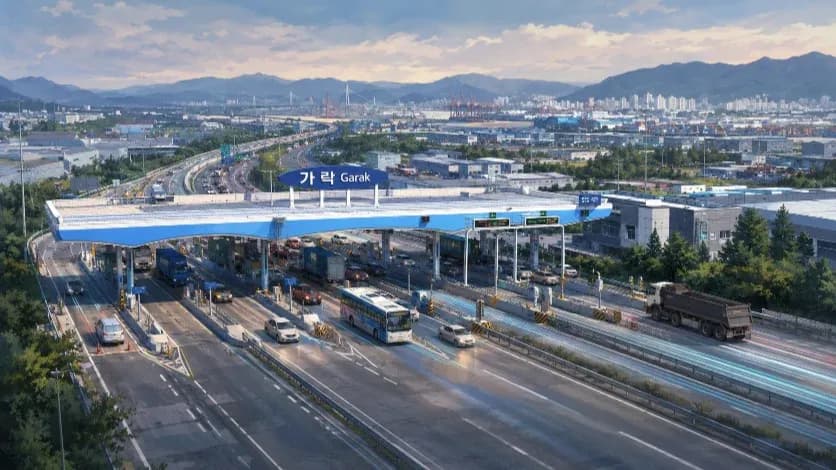
From June 1, a short toll section between Garak Tollgate and Seobusan Interchange (IC) on the Namhae Expressway Second Branch Line will begin to carry a different meaning for thousands of drivers moving through West Busan. The charge has long appeared modest on paper: 1,000 won for most passenger vehicles, slightly more for larger vehicles. Its real weight has come from repetition. Each weekday morning and evening, the same toll has been attached to a route that many workers and residents experience as part of Busan’s internal commuting grid.
Busan Metropolitan City will provide commute-hour toll reimbursement for eligible vehicles using the Garak–Seobusan section on weekdays from 6 to 9 a.m. and from 5 to 8 p.m. The city expects roughly 18,000 vehicles a day, or 4.44 million vehicles a year, to benefit. Support will be limited to one round trip per vehicle per day.
The measure applies to vehicles owned or leased by Busan residents and to vehicles owned or leased by companies and organizations based in Busan. Drivers must register their Hi-Pass card information through the toll support system operated with Busan Infrastructure Corporation, or BISCO. After approval, users will download their expressway travel records from the Korea Expressway Corporation website and submit monthly reimbursement applications through the city-linked system.
The administrative design is narrow. The urban meaning is wider. Garak Tollgate sits at the seam of a city that has expanded westward faster than its public transit network. Gangseo-gu now holds industrial parks, logistics facilities, new residential districts and the approach to Busan New Port. Workers move into the area from Saha, Sasang, Buk-gu and older districts across the Nakdong River. Freight vehicles, subcontractors and port-linked business traffic share the same corridor. The toll has become a daily marker of the delay between West Busan’s economic integration and its transport system.
A charge on ordinary movement
The Garak–Seobusan link occupies an unusual place in Busan’s transport geography. Formally, it belongs to the expressway system. In daily use, it serves as a connector between homes, factories, logistics sites and port routes. That difference explains why the toll has carried political weight beyond its face value.
For occasional drivers, the amount may look small. For commuters, repetition changes the calculation. A 1,000-won fare each way becomes 2,000 won for a round trip. Over a 22-day working month, the cost can reach about 44,000 won for ordinary passenger vehicles. Larger vehicles face a higher monthly equivalent, roughly 48,400 won or 52,800 won depending on vehicle class.
The figure alone does not explain the frustration. Many drivers have viewed the toll as a charge on movement within the city’s western living zone. A worker traveling from Saha to an industrial site in Noksan, a small business owner moving between Sasang and Gangseo, or a company vehicle serving clients near Busan New Port may see the section less as a premium expressway and more as a necessary urban link.
Busan’s ordinance on toll support for the Garak Tollgate section frames the measure around economic burden and mobility rights. That language shifts the issue from road pricing to access. The city is recognizing that the western corridor has become part of everyday urban life, even while parts of its transport system still operate as if the area were peripheral.
West Busan’s industrial commute
Gangseo-gu has become central to Busan’s industrial geography. Noksan National Industrial Complex, Shinho Industrial Complex, Hwajeon Industrial Complex, Mieum Industrial Complex, Saenggok Industrial Complex and the International Logistics City form a broad employment and logistics belt on the city’s western edge. The area also connects to Busan New Port and the broader southeastern industrial region.
This growth has produced a commuting pattern that public transit has struggled to absorb. Industrial employment has expanded across wide sites where last-mile access remains difficult. Workers often face long distances between bus stops, factories, dormitories, housing districts and transfer points. The commute into Gangseo’s industrial belt frequently depends on private cars, company vehicles, commuter buses or informal route choices shaped by congestion and work shifts.
The toll section therefore belongs to a larger transport problem. West Busan’s economy has been built around industrial parks and logistics corridors. Its daily mobility still relies heavily on road access. For many workers, the choice to drive does not come from preference alone. It reflects the limited reach of transit into dispersed industrial zones, the time penalty of transfers and the difficulty of matching public transport schedules with factory shifts.
A toll reimbursement program cannot repair those structural gaps. It can, however, reduce one recurring cost imposed on workers and companies already absorbing long travel times, fuel expenses, congestion and limited transit alternatives.
A living zone larger than the administrative boundary
The western corridor does not stop at Busan’s district lines. Gangseo’s industrial belt draws workers from Saha, Sasang, Buk-gu, Seo-gu and older parts of the city. It also interacts with Gimhae and Changwon through logistics, subcontracting, supply chains and commuting. The roads around Garak, Seobusan, Noksan and Myeongji carry the movements of a wider metropolitan economy.
The city-funded program has to draw a fiscal boundary. Eligibility is tied to Busan residents and Busan-based companies or organizations. Owned vehicles must have their registered base of use in Busan. Leased vehicles can be registered under a broader condition, according to the city’s announcement.
The boundary is understandable from a municipal finance perspective. A city budget cannot easily subsidize every vehicle moving through a cross-border industrial zone. The same boundary also reveals the planning tension around West Busan. The daily living zone has already exceeded the categories used to manage support. Residence, company location and vehicle registration remain the tools of administration. Work, logistics and commuting flows move through a broader geography.
That gap will remain after June 1. The toll reimbursement program addresses eligible users who can enter the system. It does not fully answer how Busan should design transport policy for a western corridor that functions as part of a wider southeastern labor and logistics market.
The limits of a reimbursement model
The program’s practical design deserves close attention. Drivers will not automatically receive a universal exemption at the gate. The structure depends on Hi-Pass registration, approval and monthly reimbursement.
Users must register through the toll support system, enter their Hi-Pass card information and receive approval through BISCO. They must then download expressway usage records from the Korea Expressway Corporation website and apply for reimbursement between the first and 15th day of each month.
For large firms, the process may become another administrative routine. For individual commuters, older drivers, small business owners and small freight operators, the steps may become a barrier. A generous support rate can still produce limited effects if eligible users find the process difficult, confusing or too time-consuming.
The city should therefore measure registration rates and reimbursement claims alongside traffic volume. The announced estimate of 18,000 vehicles a day describes the potential scale of the program. The more revealing figure will be the share of eligible drivers who complete registration and submit claims month after month.
A low application rate would signal a design problem rather than a lack of need. In a corridor where many users are workers, small operators and industrial drivers, administrative simplicity matters as much as the support rate.
The National Route No. 2 test
Busan Metropolitan City expects the reimbursement program to reduce the burden on citizens and industry while shifting traffic away from National Route No. 2. That claim gives the program a measurable transport test.
National Route No. 2 has carried heavy commuter and industrial traffic through the western corridor. The toll support program may draw some vehicles toward the expressway branch during peak hours, easing pressure on nearby local roads. It may also concentrate traffic near entry and exit points if too many vehicles shift at the same time.
The city’s stated goal requires a clear baseline. Traffic volumes on National Route No. 2 should be compared before and after the program begins. The same should be done for the Garak–Seobusan section, surrounding ramps and industrial access roads. Average travel times into Noksan, Mieum, Hwajeon, Shinho and port-linked logistics areas should also be tracked.
The program will be judged by more than reimbursement totals. The transport question is whether it changes the actual commute. Lower costs matter. Shorter and more reliable travel times matter as well. A successful outcome would show reduced costs for eligible users, measurable relief on congested parallel roads and more stable peak-hour movement into the western industrial corridor.
A bridge policy before the rail network arrives
West Busan’s deeper mobility problem will not be resolved at a tollgate. The district needs stronger public transit, better last-mile links into industrial complexes, more reliable cross-river movement and road planning that reflects the scale of industrial employment in Gangseo-gu.
The planned Busan Urban Railway Hadan–Noksan Line is intended to strengthen the corridor between older urban districts and the industrial areas of Gangseo. Other road and transit projects are also part of the long-term western expansion strategy. These investments will take years to reach daily commuters.
The toll reimbursement program belongs to the interim period. It is a bridge policy in a part of the city where development has already produced metropolitan-scale movement, while fixed transit infrastructure remains incomplete. Busan has expanded homes, factories, logistics districts and port access westward. The everyday cost of reaching those places has followed workers and businesses first.
From June 1, the city will remove one recurring charge for registered users during peak hours. The change will matter to households and firms that use the section every day. Its larger significance lies in what the measure acknowledges. West Busan is no longer an edge reached occasionally through special routes. It is part of the ordinary working city.
For commuters passing through Garak Tollgate, the reimbursement may appear as a modest monthly correction. For Busan’s transport policy, the test is broader. The city now has to show that the western industrial corridor can be treated as part of the urban fabric, with costs, travel times and mobility rights measured accordingly.
Continue this reporting
Reporting on the same issue
Related coverage selected from the article's desk, topics and newsroom relationships.
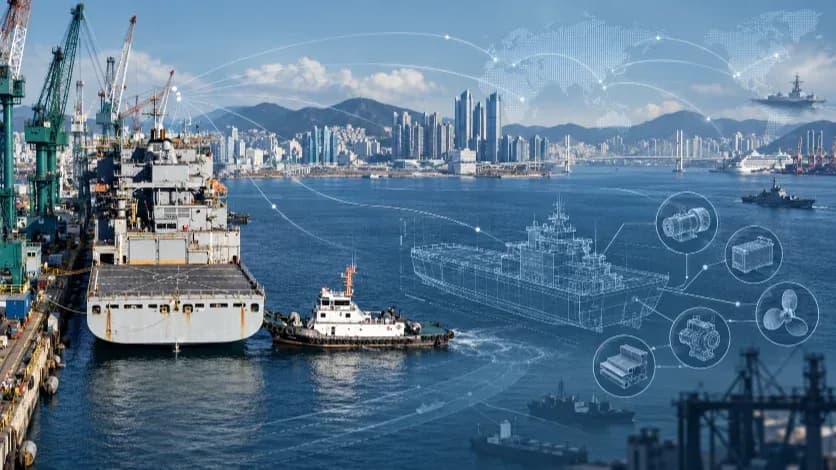 NewsSep 20, 2026
What It Takes for U.S. Navy Repair Work to Become a Busan Industry
HJ Shipbuilding has brought U.S. Navy maintenance work to Yeongdo. Whether it...
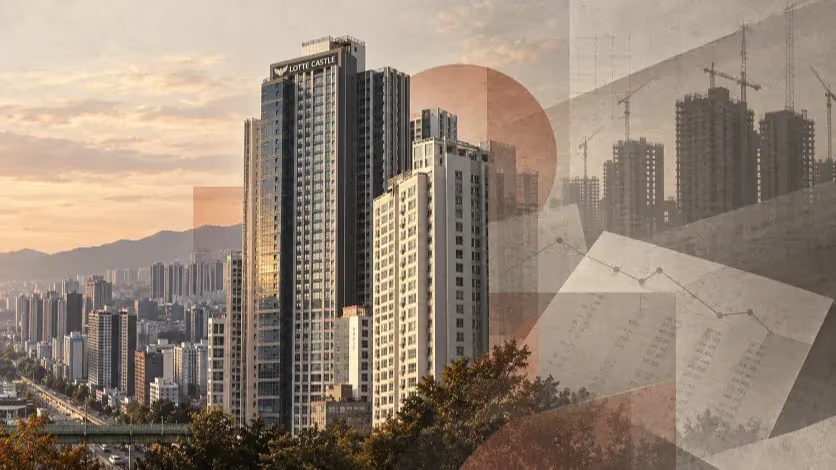 NewsSep 17, 2026
Busan’s Finished Homes, Unfinished Projects
Busan’s unsold homes sit in one monthly total, but they belong to very differ...
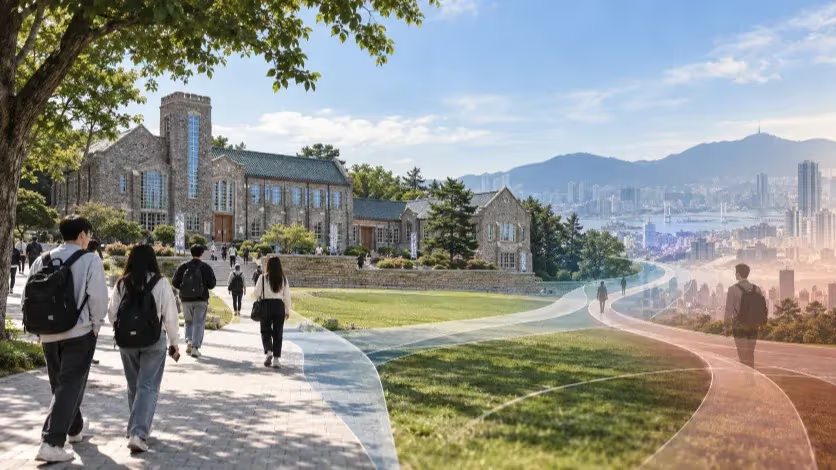 NewsSep 16, 2026
Busan’s Young-Adult Migration Turns Sharply at 25–29
Busan can still draw young adults into the city, but keeping them becomes far...
More from the author
More from this byline
Stay with the same line of reporting through more work from this byline.
Editorial Record
Corrections, sourcing notes and newsroom disclosures remain part of the published record. View Newsroom Notes →
Reader Signal
Community readWhat did this report leave you with?
Choose the signal that best reflects your reading. Select it again to remove it.
One response per article
No response selected
A moderated conversation about the reporting.
One-level replies and newsroom moderation keep the conversation anchored to this article.
Discussion Status
Open
Please sign in to join the discussion.
Newsletter
Weekly reporting and context from Busan and Korea.